策展人
Curating
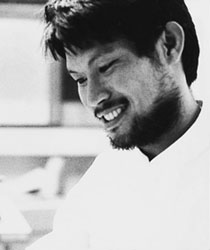
1964 生於台灣嘉義
1999 國立台南藝術學院造形藝術研究所畢業
1994 美國密蘇里州LindenwoodCollege藝術研究所畢業
1993 美國密蘇里州ColumbiaCollege藝術學士
1986 國立台灣藝術專科學校美術科西畫組畢業
2000 「蔡獻友2000個展」,高醫南杏藝廊
1999 「形象磁場」蔡獻友個展,高雄福華沙龍
1998 「圖象.寓意.還原-蔡獻友個展」,高雄宅九藝術中心
「天.地之間-蔡獻友個展」,高雄縣立文化中心
1997 「世界的原始-蔡獻友個展」,高雄宅九藝術中心
1992 「創造系列-蔡獻友個展」,高雄串門藝術空間
1990 「人與物的本來-蔡獻友個展」,台北美國文化中心
1988 「蔡獻友素描個展」,高雄黃山藝術走廊
2000 「關於藝術的原型」,台南原型藝術空間
「Body展」,高雄新濱碼頭
1999 「五光十色創作發表展」,國立台南藝術學院
「希望.魚網」環境藝術展,高雄市紅毛港
「第十六屆高雄市美展」,高雄市立美術館
1998 「台灣藝術家聯展」,義大利.米蘭
「國立台南藝術學院造形藝術1998創作研究展」
「藝術家手稿」,高雄宅九藝術中心
1997 「混亂中的重結構」,高雄鹽埕畫廊
1996 「東方工商專校教授美展」,高雄縣立文化中心、鳳山國父紀念館
1995 「秋季台灣青年藝術家推薦作品拍賣會」,台北世貿國際會議中心
「國立台灣藝術學院美術系」榮獲全國性展覽首獎聯展,台灣藝術學院
1994 「3MANSHOW」,美國密蘇里州HarryD.Hendren畫廊
1993 「南台灣美術大展」,高雄積禪50藝術空間
1992 「外畫會」聯展,高雄時報廣場
「台灣藝術新生態」,台南新生態藝術環境
1991 「外畫會」聯展,台南高高藝廊
「俗賣展」聯展,台南高高藝廊
1990 「外畫會」聯展,高雄串門藝術空間
「西德曼海姆市現代藝術交流展」,西德.曼海姆市
1989 「亞洲美協第二屆美展」,馬來西亞
「高雄市美術家聯展」,高雄市立文化中心
「海峽兩岸繪畫交流展」,北京中國美術館
1988 「教育部文藝創作美術作品展」,台北國立藝術館
1986 「台北市第十三屆美展」,台北市立美術館
「高雄市第四屆美展」,高雄市立文化中心
「第十一屆雄獅美術新人獎」四人聯展,台北雄獅畫廊
2000 獲財團法人國家文化藝術基金會「藝術創作」獎助金
1998 個展「天.地之間」獲財團法人國家文化藝術基金會獎助金
1988 「教育部文藝創作獎」水彩類第一名
1986 「台北市第十三屆美展」油畫類第一名
「高雄市第四屆美展」,水彩類第二名
「第十一屆雄獅美術新人獎」得獎
1985 「全國青年水彩寫生比賽」第二名
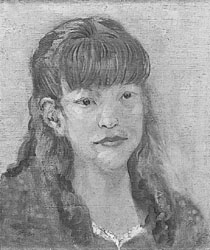
1966 出生於高雄
1986 中華醫事學院檢驗科畢
2000 高雄師範大學美術系研究所
1987~1994 任高雄長庚醫院臨床病理科醫檢師
1999 「心靈網室.欣臨往事」許淑真個展/宅九藝術中心,高雄
2001 八九不離十/原型藝術,台南
「新娘就是我」女性藝術家聯展/紫藤園,高雄
鄰居藝術家/新濱碼頭藝術空間,高雄
2000 「Body」展/新濱碼頭藝術空間,高雄
1999 「千禧契約」/新濱碼頭藝術空間,高雄
女人話題/小港社教館,高雄
「高雄市民美展--斯土人情.私箱授受」/山美術館,高雄
「新新.新人.新秀」/宅九藝術中心,高雄
1998 「高雄市民美展--串起城市記憶之河」/山美術館,高雄
1999 環境劇場「粉騷的天空--誰說女人不能…」/環境規劃製作,辣媽媽劇團,高雄縣婦幼青少年館戶外場地
1998 「解放辣媽媽」/道具場佈,辣媽媽劇團,高雄縣婦幼青少年館演藝廳
1989 「佈告欄」/演出,南風劇團,高雄市立文化中心
1987 「MEDEA在山上」/類劇場活動演出,蘭陵劇坊,基隆八斗子
心靈世界的廣闊無涯,常超乎人們的想像,但卻也是最充滿無限可能的活潑地帶。隨著人類文明的極速演進,新生活經驗大幅的翻新改裝,但心靈的課題卻是永不缺席。
自1900年佛洛伊德<夢的解析>發表以後,精神分析在人類世界裡產生持續性的發酵,不斷的在許多範疇裡發展,而這其中的二大支流便是精神醫學與藝術。在這段時間,他們或有匯合、或有對話,但多在自己的河道中各自奔流。但我們不難發現,這兩個領域,從二十世紀初至今,仍不斷的互涉,反應在醫學上,分析訓練、臨床治療不斷的修正與辯駁;反應在藝術領域裏,更是許多藝術家創作的養分,精神科的藝術治療、二十世紀初的超現實主義與表現主義藝術,便是最好的例證。
其實自古希臘時期,便有人將藝術家與瘋狂做聯想,而有趣的是,在當代人人常常談論的憂鬱症,在亞里斯多德的時代,卻是「具有創意的藝術家特質」,而且這個想法還持續了好幾個世紀,雖然近代有研究報告指出,藝術家其實與一般人患精神病的比例相似(Juda,1953),但在二十世紀的藝術確也見證了這兩者之間的類似性,如精神分裂者的畫作與表現主義和超現實主義畫作中便有些共同點:均描繪了創作者的內心世界,並使用了大量隱晦奇特的象徵符號。從這裡來看,其實某些藝術家的創作與精神病患的藝術,都有著相同的心理機制,而精神病患的藝術治療中所具有的診斷與治療功能,在藝術家身上也是相同的,他(她)們可利用藝術活動,來成為對個人問題進行分析的一種方法,這種引導性的解放可為發洩情感的手段,而防止潛在的精神問題表面化,這當然也具有治療效果。這一切的機制也是適用於一般人,藝術對於大眾其實本具有意義,並且在他們身上發揮著積極的作用,這也是為什麼從古至今,人們仍如此被藝術所吸引的理由。
藝術創作過程中,常能藉由非語言的溝通方式,而讓創作者減低其防禦心態,而將根源性的內在活動,經由轉移作用呈現於作品之中。所以藝術創作若作為一種表達,常能突破口語的限制,而在有意識或無意識的情況之下,利用轉換的方式,將自己內在的觀點與情感釋出。藝術家有把內在感受客體化的能力,於是觀者便可在閱讀其作品之中,發現其窗口,而產生了對內容的再詮釋,甚至還包含了對藝術家創作動機與心理層面的分析。但這並不能完全反射創作者當時的心態,作者也無需為作品中的心理過程負責,觀者早已離開了當時的位置,進入不在現場的對話,而觀者若預知創作者的精神世界,也必須進入到作者的歷史內去閱讀,歷史原本便會給出距離,經由再心理化的自我理解,而進入到漸漸投入的過程。所以觀者每每在作品之中,也可找到類似自身的生命潛質,這種投射作用,觀者因情感的遞換,使自己也成為主角。
所有藝術作品的精神狀態都存在著本體的層面,有時作品做為創作者賦義的表象甚為明顯,而經由精神醫學領域的探析,希望能夠去除賦義表面的掩體,而進入到創作者動機的深層原由。所以在這裡,我們試圖穿越過藝術的面向,進入到一種人的行為模式,而不僅只是提出一種對藝術的詮釋角度,而是希望將藝術跨越學科領域的理論內涵,做根源性的探討,而產生對人的基本關懷。
於是在此我們大膽的假設,從直觸藝術家作品的創作心理核心,可探討人類行為的意之所向,也就是從創作者的生命個體中,來對精神生活與心智活動進行探究,並對個體與群體的行為動機來加以了解,透過這樣的一種展演方式,便可對人類的存在以及社會文化活動的現象加以解讀。
我們在精神醫學與當代藝術作品之裏,發現兩個領域的創作者,有著相同的創作動機,以及他們較常涉入的心理機制。而以下所涉入的單元與角度,可從單純的生物性內驅力,而擴散到歷史文化等等結構,這並不是想要一概而括的支持各種理論與學說,而是個體的存在、人類的行為表徵,原本就是件複雜且多元之事,單獨立論的成立,都需援引其他的學說,才能朝向較完整的釋意。所以整個展覽的架構,有著朝向人文的內省分析和人的「存在」思維,來描繪意識體驗與族群整體的關係。
在這次的展覽中,我們找了與心理層面創作有關的台灣當代藝術家與藝術作品,並將年齡界定在25歲(1976年生)到55歲(1946年生)之間,而作品完成的年代也設定在近五年內的創作作品。這樣的選擇是希望在這差距30歲之間,而同是戰後出生的藝術家中,從台灣這樣一塊土地上,在經歷不同的生活年代(成長於解嚴前後)、不同的年齡,而在同一當下,如何呈現個體對外在環境和內在心靈的感受於藝術創作之中:
一、 「遊戲樂園」:創作本身便具有玩的願望,這是具遊戲性的。精神醫學裏的遊戲治療與藝術領域中所談的遊戲性質,莫不視其為解放心靈的妙方。遊戲與人生一般,具有不確定性與各種可能,藉由抽象遊戲過程,而轉成的具體行為之中,可讓自由性達到極致。這種非常投入的遊戲性行為,是一種虛擬空間與想像力的結合,並常會與自己的生命根源合為一體,使人在心醉神馳之際達到圓滿,而具有追求身心自由的意涵,也充分反應了人類不欲被駕馭之性靈。
二、 「身體地圖」:向來西方的科學實證主義將身體視為客體的研究,並鄙之為形而下,這樣的身體與精神的分離,在二十世紀的人類文明,看待身體已有不同的思維與方式,再加上精神醫學的研究,得知身體除了記憶肉體的實質感覺之外,還能儲存心靈密碼,從潛意識所釋放出來的自發性想像過程的藝術表現,便是一種內在經驗的圖像表達,身體經由聽、視、觸、嚐、聞等知覺,將現實界域轉至精神界域,而存在於潛意識之流,這種非知識層面所能理解的身體記憶,常能反映出個體最真切的真實。在當代,身體也常與社會禁忌發生衝突,而成為對抗禁忌的戰場,因此當代的藝術家透過藝術作品,展露出個體精神與身體碰撞的真實場域。
三、 「精神光引」:相較於玩的欲望,有些創作者也具有創作秩序的願望,這裡面有的具宗教、信仰、禪修的部分,這個部分常被解讀為躲避現實的退化性的自我保護行為,也就是利用宗教逃避責任的自我防衛機轉,是一種在現實外另尋心靈庇護體的一種意識呈現。但也有人認為這是個體化的靈性整合,而非聖徒化的道德完美過程,所以是具積極性的,他(她)們認為對自身存在的精神性加以關注,會接近一種修道體驗過程,這種發自內心的深省與反思,是純化與昇華的表現。的確,在世紀的轉換點上,人們面臨了更巨大的科技超速與資訊亂流,宗教成為許多民眾面對巨流中的精神依託。藝術家在這當中,試圖想要成為都市叢林中的鍊金師便大有人在,於是古代宗教文明與信仰力量的再精鍊,便成為當代藝術家的光引,而新生活哲學的人文精神,東方哲學裏天人合一的想像,便一一具現在藝術作品之中。
四、 「童年相簿」:成人世界的許多問題,常導因出是童年成長經驗與記憶,這理由生理、心理與記憶所組合而成的生命相簿,有時會成為人們擺脫不去的宿命原型。許多藝術家在經由潛意識的方式創作時,會在〝顯意〞中出現最近的經驗,而在〝隱意〞中出現兒時的經驗,那種在醒覺狀態之下不復記憶的兒時經驗,或已存在於記憶之中的兒時情結,常常成為藝術家們的創作來源。
五、 「文化症狀」:個體的景況,也隱喻了社會變化中的結構,因社會環境的影響,不同的生長空間,不同的環境氛圍,常是介入個體思維與行為的影響因子,這裡有別於本能決定,而進入到研究文化、族群的影響,從社會議題為創作模式的思潮,到小至失落性負向生活壓力反應,這居中的社會、家庭、相處成員等,對個體所產生的文化症狀,是屬於外因性的,有別於個人內在的因素,這種圍繞於個體之外的種種成因,使藝術家不自外成為社會的旁觀者,而是大環境之政治趨勢與社會體制支配下的情感反應者。
翻開二十一世紀的新頁,接續二十世紀末,跨領域、跨學科的藝術展演趨勢,將會在這個世紀繼續發光發熱,但這類展演的實質內涵是甚麼?是互相成為對方的形容詞,而後續各說各話,還是真正進入到對方的領域,交互作課題的探討與了解。本展便是努力朝向後者的方式,選擇了藝術創作本身與藝術歷史中,最為相關連的學科—精神醫學,來作為初探。從這裡是否可解除從固有藝術範疇所堅定的命題,進入到創作者道不出卻又不斷反應的緊箍,由這次精神醫學與藝術的連袂演出,就是希望能夠讓學科與學科之間,作更廣泛的交流與互通,產生更開放寬廣的視野與角度。
在當代藝術與人們有越來越相行漸遠之勢,作為此形態的一個策展,利用精神醫學對藝術的切入,讓觀者有足夠詮釋的空間,是拉近觀者與作品的絕佳方式,這當然也意味了擴張觀眾對藝術理解的自主能力。
所以展覽的重點不在於界定「藝術」與「非藝術」,或者在劃分「正常」與「異常」,而是希望從這些藝術與靈魂的緊密結合創作方式,與經由精神醫學的專業性對話,希望大眾在面對創作作品時,不僅就純粹視覺美感的感受,而能看出藝術家所傳達出來的精神層面,因為它表達了人類靈魂本身的語言,也呈現了心靈的真實。所以希望經由這兩者的互通與交流,以期讓大眾能用不同的視域與觀點來重新看待精神醫學與藝術,藉由人類的心靈活動(藝術創作),來與另一個靈魂(觀眾)溝通,這便是此展最重要的目的。
而最重要的便是希望藉由個體藝術家的生命經驗與觀點的呈現,能由從其個體的生命史實中,提出普遍人類的思想型態。這種尋獲共鳴的指標,便是從關懷個體生命的悲喜,而來到關照全體人類生命的共通情感,利用這次策展的方式, 將藝術家真有實感的內在經驗,藉由創作者所形塑的媒材空間,透過公領域的展演,帶給觀眾的是重返個體的寶貴生活經驗,與一個世代在社會變遷中的深層精神活動,在透過藝術家個體經驗的藝術作品中,使人們能再度與生活與生命取得聯繫。
在這表面一直不斷更新的時代,外貌綺麗詭異的社會中,經由這種心理與生理的重新整合,帶給大眾的將不在是一種短暫式的展覽活動,而能積澱出新的精神價值,經由他人的的生命歷程體驗,產生對自我、社會景況的了解,而能達到洗滌心靈的效果。在這樣試圖引燃精神動力,重新再視人類心靈活動的展演中,其實便是希望在這現今紛亂多變的社會裡,經由精神分析的微觀中,提煉人類漸被物質化的精神界域。
The spiritual world is boundless and is often out of our imagination. It is also an active area full of possibilities. With the rapid evolution of human civilization, our life experience has been changed constantly, but the learning about our spirit has never been stopped.
Ever since the publication of "Interpretations of Dreams" by Freud in 1900, psychoanalysis has continuously grown in the human world and developed in many fields. Among them, the two main streams are psychiatrics and art. During this period of time, they have had some conversions or some dialogues, but most of the time, they remained as two independent streams. Nevertheless, it is not difficult to see that from the early 20th century to date, these two fields still interact with each other. Reflecting in the medical field, the result is the constant amendments and arguments in analysis training and clinical therapy; and in the art field, it is the nutrients for creation. The art therapy in psychiatrics and the Surrealism Art and the Expressionism Art are the best examples.
In fact, since the ancient Grecian, people have associated artists with craziness. More interestingly, the so-called melancholia today was actually considered as "a property of a creative artist" in the time of Aristotle. This idea has prevailed for several centuries. Although modern studies indicate the risk for the artists to encounter psychiatric diseases is similar to that for general population (Juda, 1953), the art from the 20th century has demonstrated the similarity between the two. For example, both the works of the schizophrenia and the Expressionists or the Surrealists described the inner world of the creators and they all use numerous strange obscure symbols. From here, it seems like the creation of the artists and the arts of the psychiatric patients actually have the same psychic apparatus and the diagnostic and therapeutic functions of art therapy for psychiatric patients may have the same effects for artists. He/she may analyze personal problems through artistic activities. This kind of inductive release may be a way for him/her to ease feelings and to prevent the hiding psychiatric problem from appearing. This certainly has its therapeutic effect. This apparatus can also be applied to the general population. Art has its meaning to the public and it actively affects the public, this is maybe why the human being is so attracted to art down through the ages.
During art creation, the creators communicate in ways other than languages. This will help them to reduce their defensive mind-set and transform their original inner activities into their works. Therefore, using art creation as a way of expression can usually break the limit of the verbal language and through this conversion, the creators can express their opinions and feelings consciously or unconsciously. The artists have the ability to make their inner feelings become subjective, and the admirers may find their own windows while studying the works, reinterpret the materials and even analyze the motivation and psychology of the authors in creating the works. However, this does not completely reflect the mental condition of the author and the author is not responsible for the psychological part of his works; the admirers have left their present position and started a conversation in absentee. To predict the mental world of the creator, the admirer must enter the past world of the creator. Because there is always a distance between the past and the present, the admirer has to self-explain psychologically and then gradually blend into the process. Therefore, the admirer can often find some life qualities that are similar to theirs. With this projective effect, the admirer shifts their feelings and makes himself the main character.
All the mental status of art works has some substantive innate level. Sometimes it is obvious that the work implies something about the creator. Through the study in psychiatrics, we are hoping to remove the mask of the underlie meaning and to study the motivation of the creator in creating this work, that is, to understand the behavior pattern of a person via art. We want to not only provide our interpretation about art, but also go across the subject theories and study the origination of art as to express the basic care to the human.
We hypothesized that by studying the psychological nature of the works by the artists, we may find the purposes of human behaviors, that is, to study the psychological life and mind activity of the creators as to understand the behavioral motivation of individuals and groups. Through the way of exhibition, we may further understand the meanings of human existence and the phenomena of the social cultural activities.
Studying psychiatrics and contemporary art, we found the same creation motivation in the creators from both fields and the psychic apparatus they are often involved. The opinions from the following sessions cover from the basic biological inner drive to the historical and cultural compositions. We do not intend to accept all theories and concepts entirely, however, the existence of an individual and the form of human behavior are themselves complicated and diverse. The establishing of each single theory requires the supports from other theories to be more completely understood. Therefore, the construction of the whole exhibition is to describe the relationship between conscious experiences and the human being by the introspection and analysis of humanity and the discussions on the "Existence" of human being. In the exhibition, we have some creators and their creators of the contemporary art in Taiwan related to psychology. We set the age of the creators at between 25 (born in 1976) and 55 (born in 1946) and the works have to be finished within the past five years. The purpose of this arrangement is to study how creators living in different eras (before and after the martial law) and at different ages, express their feelings to the outer environment and the inner world in their works:
1."Playful Paradise":The creation itself has a desire to play and is playful. The game therapy in psychiatrics and the playful property in art are both miraculous cures to mind relief. Just like life, the game is full of uncertainties and all kinds of possibilities. Converting the abstract game playing into the concrete behaviors can achieve the highest freedom. This completely absorbed playing behavior is the combination of an imaginary space and imagination. It usually becomes a part of the original life of a person and makes the person achieve satisfaction at this ecstatic and over joyful status. This attempt to pursue both physiological and psychological freedom also reflects the "unwilling to be controlled" nature of the human being.
2."Body Map": For a long time, the Western Scientific Positivism has regarded the human body as an object and despised the study of human body as metaphysics. Such idea that body and spirit are separated has changed in the 20th century. Along with studies in psychiatrics, we now know that in addition to memorization and actual sensation, our body also stores the special code of our mind. The release of our spontaneous imagination from our unconscious world during art creation is an example of expressing our inner world in images. Through the senses of hearing, seeing, touching, tasting, and smelling, our body converts the real world into the spiritual world and stores the information in our unconscious world. This kind of body memory that cannot be explained at the knowledge level often reflects the most vivid truth about the individual. In contemporary, body also has conflicts with the restrictions of society and quite often became the battlefield for fighting with the restrictions. As a result, the contemporary artists like to use their works to reveal the real fields that the battles between our mind and body occur.
3."Spiritual Guidance": In contrast to the playful desire, some creators also have the wish to create orders, including religion, belief, and meditation. This part is usually interpreted as a passive way to protect oneself from the reality, or use religion as a self-defense mechanism to escape from responsibilities, a conscious expression in searching for a protection for our mind outside of the reality. But some people consider this a mind integration of an individual, not the process of moral perfection as in a saint, therefore, is positive. They pay attention to the existence of their spirit, though a process similar to spiritual cultivation, deeply introspect and reflect about themselves. This is a way of purification and distillation. Indeed, at the turn point of the century, the human being is facing the ever-greater technology speeding and information turbulence. Religion has become the spiritual trust for many people in this mighty current. Among these people, many artists try to be the blacksmiths in the city jungle. Thus, the ancient religions and believes are refined and become the guidance of contemporary artists. New life philosophies of humanity, including the imagination of the unification of the nature and the human being are all being presented in the art works.
4."Childhood Photo Album": Many problems in the adulthood are actually resulted from the childhood experiences or memories. This life photo album composed by the physical part, psychological part and memories of life can sometimes become the designated fate that one can never get rid of. Through the unconscious creation, the "appearing meaning" of the work shows the recent experience of the creator, but the "underlie meaning" of the work actually reveals the childhood experiences, which are no longer recalled in conscious state. The situations during childhood stored in the memory are also the inspiration for creation.
5."Cultural Symptom": The condition of an individual also implies the structural changes of the society. Under the influences of the social environment, different space and different environmental atmosphere are often factors that affect the thoughts and behaviors of an individual. Here we move from the determination of instinct to the effects of culture and population, and discuss the social issues as the inspiration for creation. The social symptoms, including the reaction to the lost and negative pressure from life and any member of the society, family, and related person, the social symptoms derived in every individual is exogenous, as is different from the endogenous personal factors. Surrounded by the various exogenous factors, the artist is not an outsider, but the responder to the political trend and social system of the big environment.
As we turned the last page of the 20th century and entered the 21st century, the cross-field and cross-subject developing trend of art will continue to glow in this century. But what is the substantial meaning of this development? Do the different subjects just become the adjectives of each other and then go their separate ways, or they have really incorporated with the other field and begun their interactions? The later, is the goal for this exhibition. We pick Psychiatrics, the subject that is closely related to the art creation itself and to art history, as our first exploration. We would like to know if we can release art from its indigenous scope and enter the enchantment that cannot be explained by the creators, but appears over and over again in the works of the creators. With this exhibition, we hope to encourage the interaction and communication between different subjects and to open up a broader view for everyone. Today's contemporary art seems to be getting far away from the human. In this project, we use psychiatrics as our topic to let the admirers have enough space for interpretation. This is the best way to decrease the distance between the admirers and the works, and it certainly promotes the controllability of the audience to the understanding of art works.
Therefore, the purpose of this exhibition is not to define "art" and "non-art", or "normal" and "abnormal", but to let the public feel the spirit the artists expressed while seeing these works that closely combine art and soul, instead of merely sensing the pure visual beauty. These works are not only the language of soul itself, but also the most honest truth of the heart. We hope the public will view psychiatrics and art differently after experiencing the interaction and communication between the two. Communicating with another soul (the audience) through the activity of human mind (creative art) is the most important purpose of this exhibition.
Furthermore, we would like to propose a typical thinking pattern of the human being by studying the way that an artist presents his life experiences and opinions. The direction to this search is to start from caring the sorrows and happiness of an individual then to consider the common feelings of the entire human being. Through this exhibition and the media and materials designed by the creators, the truthful inner experiences of the creators brought to the audience the cherishing life experience as one returns to him and an in-depth spiritual activity. With the works describing the individual experiences, human retrieve the connection of living and life.
This is an era that appearance constantly renewed and a society where outer-look is beautiful but bizarre. With the new integration of psychology and physiology, this exhibition is no longer a short-term displaying activity; the new value of spirit from others' life experiences will lead to the understanding of oneself as well as the state of the society, and eventually renew our mind. We hope the spirit of reexamining the mind activity in this exhibition can renovate the materialized heart of the human being in this turmoil society.
藝術創作與人的關係,說簡單是十分地簡單,因為當中有一部份是相當直覺化的歷程:人,透過視覺、影像、文字、聲音或動作,創作出能引發他人美感經驗的作品,就可以說是一種藝術創作,就是「存在—產生」這樣線性般的關係;但這關係,說複雜也是相當地複雜:單從藝術創作本身的多樣性與人的多面向做交集,我們可以從非常多種角度切入,來討論藝術創作與人的關係。因此,在接續的文字當中,我們將努力專注地從精神醫學的角度出發,探索藝術創作與人的關係。本文不敢舉起什麼學術大纛,企圖建立任何理論,或是推翻過往既存的學說。只是試圖立足於當下的時空,在廿一世紀的現在找尋一個起點,援引當代精神醫學的研究發現為出發點,背負著過往醫學、科學、人文科學與藝術的資產,重新探索人類族群所特有的藝術創作的寶藏。
何謂精神醫學?「精神醫學」,隸屬於醫學領域中的一環,相對處理的對象就是所謂的「疾病狀態」,意即在研究處理人類因為「生病」而產生的種種問題。然而,精神醫學對一般大眾而言,無法等同於一般醫學的疾病來理解。感冒生病,我們會看到病人流鼻水、打噴嚏;細菌感染症患者,抽血檢查可能可以發現白血球升高;胃炎胃潰瘍的患者做內視鏡可以看到胃黏膜的損傷;幾乎所有的疾病,都是可以透過一定的檢查或檢驗程序,讓一般大眾看到所謂的「客觀證據」,證明是當事人的「身體出了問題」,不是「心理有毛病」。而精神醫學處理的對象,是看不見、摸不著的「精神」,旁人能夠感受到的是當事人的「思考、情緒、或行為」與他人「不太一樣」;但是,在一般的概念中,一個人的「思考、情緒與行為」都「應該」是「可以自己控制的」!因此,精神醫學的發展也是隨著人類文化的發展與科學的進步而日新月異。在很早期的「神怪宗教取向」(巫婆的教棒Malleus Maleficarum,Heinrich Kraemer & Johann Sprenger, 1487),是由「巫者與術士」負責代替大眾面對那些「令人無助、無力面對」的情境或疾病;之後,伴隨著文明與文化的發展,「心理情緒取向」以及「學習行為取向」(Hypnosis: Leibeault & Bernheim, 1837- 1919 & Jean Martin Charcot, 1825- 1893; Psychoanalysis: Sigmund Freud, 1856- 1939; Self-psychology, Alfred Adler, 1870- 1937; Analytic psychology: Carl G. Jung, 1875- 1961; Classical conditioning: Ivan Pavlov, 1849- 1936; Operant conditioning: John B Watson, 1878- 1958)將精神疾病某種程度上(或某些範疇中),視為個人心理失調的結果。此外,在「身體器官取向」的倡論者中,從早期把精神疾病歸因於當代已經認為毫不相干的身體問題(Hippocrates 460- 355BC: 四液與四氣;Galen 130- 200AD:四氣質;春秋戰國:外感六氣、內傷七情、三毒失調),到當今被認為最切近於真實的「神經傳導物質學說」,精神醫學界本身對這些疾病的理解,也是逐步貼近於真實。
令人遺憾的是,到目前為止,甚至許多非精神醫學範疇的醫師或其他醫學相關人員,仍然分不清楚「精神醫學」與「心理學」的差異。他們常常把精神疾病當作心理問題。殊不知,精神醫學乃是從「生物心理社會」等「全人觀點」,整合性地觀察與評估一個人的「思考、情緒或行為」出現偏差或異常的原因、程度並安排相關治療。完整的來講,精神醫學的思考方向,是針對個體經歷各種所謂「心理社會事件」的過程中,被動或主動地接受到整體環境的需求,引發這些在大腦中的「知覺、思考、情緒或運動中樞」等不同部位中的「神經傳導物質」調節機能失常,導致個體的「知覺、思考、情緒或運動」功能異常等現象。甚且,以目前的分子生物學的發現來說,大腦這些中樞會產生機能失調的主因,個體「基因的脆弱度」扮演相當吃重的角色,而「心理社會事件或是環境因素」可能多是扮演這些精神疾病的「促成因素」、「誘發因素」或是「維持因素」等角色。
早期對大腦功能變化未曾了解之時,曾對精神疾病患者之症狀及病因有相當多的猜測與誤解,倒果為因。比如說對於病人為何生病,曾經就有人推論是患者的母親「情緒過度介入、高敵意、高批評」等特質引起的,一直到最近的研究,才發現有些家屬有上述特質的表現,有時候是長期照顧一個失能的患者之後,慢慢累積出來的習慣與情緒。就如同佛洛伊德評論精神分裂症患者常用的所謂「原始的防衛機轉」,若以今日神經精神醫學的角度切入,可以看到患者整體的大腦功能在疾病影響中退化,而對訊息缺乏統整或反應能力而呈現的現象,患者絕對不是因為他們無法面對某些內在壓力而選擇以症狀來逃避!即使要選擇很爛的逃避方式,也不需要(也無法)讓自己在幻覺與妄想的世界中受苦!
因此,今日精神醫學的角度,已經跳脫當年對疾病不了解,徒然以未生病者的角度去揣度評價患者的世界,思考的核心是「某患者的『病』」(The illnesses of somebody)。現在的精神醫學,探索的是人在經歷腦功能變動後的整個世界,必須去經歷的幻覺經驗、妄想經驗、錯覺經驗、以及自我功能退化等等負向經驗中,他∕她的感受、經驗、想法以及求助的經驗,主題是「生病的『人』」(The person who get an illness)!
以此一角度切入,從精神醫學的觀點看藝術創作與人的關係,我們可以探索的主題包括:從神經精神醫學看藝術創作與人(生物層面)、從個人心理發展面看藝術創作與人(心理社會層面)、精神疾病患者的藝術創作經驗(包含藝術創作者罹患精神疾病後的藝術創作經驗)、藝術創作者與精神疾病患者雷同的藝術知覺經驗等。
公元兩千年六月二十六日,美國總統柯林頓與英國首相布萊爾以衛星連線共同宣布:人類基因組計畫提前完成,人類進入所謂「後基因組時代」。從十九世紀後葉的孟德爾的豌豆研究為基因研究揭開序幕,由一九00年的三位植物學家發掘出孟氏重要的研究;一九五三年,華生及克力克建立出去承載人類基因的去氧核醣核酸DNA的雙螺旋結構,一九九0年跨國際的人類基因組研究計畫起步,並於公元兩千年六月,比預定提早五年宣告完成人類基因組定序的研究。科學家宣稱,在未來的一、二十年之間,我們將可能帶著含有自身DNA資料的DVD光碟到處走動,讓我們的醫師可以掃瞄我們的基因組而產生一份「個人罹患疾病風險計分表」,羅列我們罹患一般常見疾病(如心臟病、糖尿病、高血壓,以及精神疾病風險指數),並提供最有效的治療建議;從易罹患的疾病、對藥物的反應度與耐受性的理解,到遺傳性疾病的基因篩檢;甚至在對自己性格特質的評估,人類基因組研究,讓我們可以掌握開啟未來的鑰匙,以及理解人類演化過程的隱性地圖。不只是各種疾病,人類所謂的藝術天分,也有極大的可能是由基因來控制。
舊金山加州大學遺傳學家吉茲雪兒(Jane Gitschier)目前就在尋找負責控制人類「絕對音感」的基因,目前她已經發現這份能力具有高度遺傳的特質。美國國家癌症研究院的遺傳學家漢默(Dean Hamer)在一九九六年證實,人類多巴胺(Dopamine)第四型受體基因的長度變化,與心理學上一項稱為「追求新鮮感」的特質具有相關性。另外,有另外一個基因序列,可以影響血清素(Serotonin)在腦中的量,相對影響個人情緒穩定度相關(目前新一代的抗憂鬱劑就是包含血清素回收抑制劑或是血清素與正腎上腺素回收抑制劑,其作用可以提高人類大腦中血清素的濃度)。雖然我們理智上可以相信,基因控制了人體發展的基礎,但是,真正要去想像藝術創作這樣耐人尋味且難以捉摸的個人能力,在基因遺傳學的科技發展中,即將被抽絲剝繭地解密,仍然要教我難以相信。這些與藝術創作能力相關的研究,是不是意味著藝術創作的神秘面紗,即將暴露於基因組合學的解剖利刃下?是不是未來將不再有「天縱英才」的存在?是不是我們只要將某個基因植入胚胎當中,我們就可以製造出一整個生產線的蕭邦?另一條生產線叫做華格納?是不是只要透過基因控制,我們就可以造就出同時一個具有貝多芬的音樂天賦、畢卡索的美術才華,以及托爾斯泰的文學造抑的不世天才呢?在逐步從醫學的角度切入藝術創作與人的關係的探討之前,我們要邀請讀者一起想像這樣的可能…
從當代精神醫學的演繹,切入科學界當紅炸子雞的基因遺傳學觀點,在決定論者的觀點當中,基因對於人類生活中的未知,至少已經決定了百分之五十的比例。藝術創作與人之關係的基礎,似乎有一部份和基因是脫不了關係!但是,在過往這些玄虛而迷人的藝術創作的歷程,又如何在大腦運作呢?且讓我們隨著神經精神醫學的發展,逐步踏入那個奧妙難懂,周旋於被細胞生物學赤裸裸地物化解剖或是繼續維持以往那種只能意會不能言傳的創作歷程的藝術創作的領域!
在精神醫學的領域中,所謂「精神層次」,是許多偉大的文學家、作曲家、創作家們得以跨領域、跨文化地引發觀者內在的共鳴與感動之所在。然而,這些「精神層次」的基礎和腦神經組織與功能終究脫不了關係。頂尖的藝術創作者可以與目前頂尖的神經學家相比擬,只是神經學家知其所以然而難以使其然,而藝術創作者則是使其然而不知其所以然。畫家反覆在畫布上與腦海中修改他們的作品,以達到他們自覺滿意的效果意即是他們的大腦覺得滿意的效果;而當觀者也覺得滿意也就是別的大腦也覺得滿意時,就是這些作品的物理性質刺激大腦中的神經傳導系統,並透過大腦系統的整合,誘發出「令人愉悅的神經化學反應」的時刻。例如達文西在五百年前說過,在所有的顏色當中,最讓人愉悅的就是對比色。這是從他藝術家的眼睛至大腦聯合運作後所獲得的結論。五百年後,生理學家發現了視覺神經系統中的「拮抗現象」(即感應紅色的神經細胞會受到綠色光的抑制,感應黃色的細胞會受藍色光的抑制,而黑色則會抑制感應白色的細胞)。在十九世紀的米歇爾‧契夫勒爾(Michel Chevereul)亦曾提過顏色會受到背景影響的主張,當代的生理學家證明了,這是因為大腦細胞對主體色彩的感應會深受背景顏色的影響。因此,若我們從精神醫學中的神經生理學觀點切入分析視覺藝術與腦部活動的關聯,也許可以探索到藝術創作與人之間的關聯,在大腦運作的層次上的詳細歷程,進而找到屬於當代藝術創作的另類觀點。
視覺腦取得訊息的過程其實很複雜。我們假設,大腦會選擇性忽略一些次要訊息,主動汲取持久不變、別具特色的主要訊息,再依據這些特性對這些外在的物件進行分類比對。但是,大自然中的各類訊息是瞬息萬變的,我們與物體間互動的角度、距離、光線的來源、亮度、背景物體的形色明暗,無一不是隨時在改變。甚至一天之中不同的時間,不同的溫度與溼度下,物體反射出的光線波長也會隨之改變。在這些不斷變動的外界訊息當中,我們(的大腦)還是能區分許多物件原來的顏色,如蔬菜水果的顏色﹔我們也能區別不同的人臉上呈現類似的線條時,可能代表的就是高興或是悲傷!因此,在視覺藝術的創造過程中,存在著相當複雜的歷程:如何擷取萬物居之不易的共通特質,將這些特質呈現出來﹔然後又必須如何在這些共通的特質當中,以什麼樣的方式摻雜混入一些獨特的訊息,以呈現出對象物件與眾不同的獨到之處,進而能在吸引非創作者的大腦細胞注意到這些創作品,從而接收到隱而不顯的共通訊息,而喚醒觀賞者大腦裡頭記憶中樞、感覺中樞、甚至是週邊神經(包含感覺神經、運動神經以及自律神經)的回憶(與這些共通訊息連結的過去感覺經驗),而讓觀賞者深深被感動(亦即讓觀者對在情緒、感受,甚至是對事件的回憶有相當程度的連結)!如何處理這些變與不變的訊息,組合出創作者期待的效果並引發觀者的反應,應當就是這些藝術創作者常常要廢寢忘食嘔心瀝血去努力的課題。
我們常以「筆墨難以形容」來形容觀賞藝術創作所帶來的美感經驗。雖然「筆墨難以形容」,但是大腦細胞卻是接收如儀。我們知道,在人類發展出語言文字與抽象思考的能力之前,我們的感覺神經與各種知覺中樞(如視覺中樞、聽覺中樞等)早已存在並演化了數百萬年。因此,視覺能在幾分之一秒內察覺大量訊息,包括一個人的精神狀態、顏色、甚至持續變化中的物體。我們只要憑細微的變化就能看出表情的悲喜即是一例。馬蒂斯曾經說過:「在瞬息萬變的表象世界下,潛藏著更真實、更接近本質的特質。藝術家能夠掌握這種特質,呈現出永恆的真實。」是的,藝術創作不就是在探索創作者內在的歷程中,嘗試去掌握永恆的歷程嗎?法國的評論家傑克斯‧李維艾爾(Jacques Riviere)曾在一九一二年表示:「繪畫的真正目的是呈現事務的真實面貌,也就是說和我們所看到的不同。繪畫常能呈現出事物的本質,這種本質讓我們得以辨識它們的存在,這就是為什麼繪畫所呈現的影像和事物的表象會有所出入的原因。」藝術創作是超乎表象的,因為表象會不斷改變,而藝術創作可以掌握住表象之下某些永恆的特質,喚醒人心深層的記憶與感動。
視覺的形成,來自於光線這種能量,在人類的視網膜產生一種刺激,這個刺激的原始本質上,並不具有所謂「彩度、色溫、明亮」等等經人類劃分解譯歸類後外加的特質,它們只是不同的物理能量。只是這些物理能量,可以在視網膜產生「對應的」刺激。這些刺激,經過視神經的傳導,影響人類大腦中的一個特定區域,主要視覺皮質(primary visual cortex,V1),這個區域主要是接收視神經傳來的神經衝動等訊息。在視網膜的中央窩(central fovea)是位於最中央的一小點,在主要視覺皮質有不成比例之大的對應區,意即視覺的生理反應,先天上特別強調進入視網膜中央窩這一部份的視野。此外,在主要視覺皮質周圍,是過去被稱為連結皮質區(association cortex),它們不會從視網膜接收任何重要訊息,而是處理從主要視覺皮質傳來的訊息。德國的一位精神醫學教授保羅‧弗萊希胥(Paul Flechsig)認為連結皮質區不只是協助比對目前的影像和過去同類影像的訊息而已。連結皮質區現在被稱為特化視覺區(specialized visual area),弗萊希胥稱之為「精神中心(geistige Zentren)」或「思想中心(Cogitationszentren)」,除了比對的功能,其實還具有對視覺產物的理解認知功能,好比一個特化視覺區受損的婦女,即便她看到海綿,可以描述出它的顏色、形狀,也可以記得以前看過同樣的東西,一直到她觸摸到海綿之後,她可以「知道」那個「東西」就是海綿。
柏拉圖在《理想國》第十卷中提到:「繪畫模仿的是什麼?是現實或是表象?它模仿的是幻象還是真理?是幻象。既然如此,模仿式藝術和真理就有很大的出入了。對,它模仿的是表象,而不是現實和真理。」在柏拉圖眼中,具象的藝術只是對真實的二次模仿;世界上存在一種理型。因此,叔本華寫道:「繪畫必須盡可能地呈現某項事物的相關知識。並不是描繪某項特定的東西,而是描繪柏拉圖的『理型』,也就是足以代表某一類事物的永久型態。」柏拉圖對理型的期待,必須透過大腦的視覺記憶儲存系統發揮功能才能達成。下顳葉腦回(inferior convolution of temporal lobes)裡的腦細胞,在我們觀察新奇的事物時,會利用整合不同細胞群的反應來分類不同的觀察特色;而顳葉附近的海馬回(hippocampus)在接受電刺激時,可以喚起被遺忘已久的記憶。透過不同的「特化視覺皮質」的功能,大腦細胞可以捕捉到不同時間、不同情境下的事物、狀態或情境中,共通的概念與屬性。而康德和黑格爾則認為藝術比「稍縱即逝的感官知覺」更能表現真實。黑格爾認為,「觀念(Idea)」是由「概念(Concept)」形成。「概念」是由短暫的感官記錄所構成,而腦中概念被「以更單純的手法,恣意地將它精挑細選後的珍寶『傾注』在畫布上,不必考慮真實世界中的種種狀況和佈局」後,形成藝術家所創作的「觀念」。就如同萊德加爾‧竇加(Edgar Degas)畫中的芭蕾舞者和馬總是含有動態感,因為「他將每一刻的畫面融合,重新呈現出來;他充滿動感的繪畫遠比寫實的照片更為真實。」布萊恩蓋里在評論塞尚的一幅自畫像的文章中說道:「…塞尚分析過一個個表情之後,便重新整合,創造出另一個比本人更真實的人,因為他更複雜,卻也更具一致性。」
在賽莫‧薩基(Semir Zeki)的(Inner Vision: An Exploration of Art and the Brain)中,他透過許多臨床生理學的實驗,驗證大腦中許多不同部位的腦細胞對顏色、方向、形狀、動作、線條、距離等不同的物理屬性存在平行卻也有互動的特化功能區,在他們的合作與平行運作下,大腦對外界的物理性刺激才能產生感受、知覺,也才能夠體現藝術創作的內在意義。視覺腦的顏色中心(V4)受損的患者,完全喪失對顏色的記憶,也無法去想像什麼叫做顏色。在這種情形下,柏拉圖的「理型」以及黑格爾所預期的「藝術的真實」,反而變成很難存在的想像。透過神經精神醫學的臨床研究,藝術的存在,是外界客觀存在的各種物理特質,透過神經知覺系統,與我們的大腦產生「交互作用」後的產物;如果觀賞者在出生後的關鍵時期喪失視力,日後他即使重見光明,也無法靠視覺辨識任何物體,遑論產生藝術欣賞的美感經驗了!
若探索當代藝術與精神醫學交集的過程中,一九五九年的大衛‧修伯爾(David Hubel)與托斯登‧維瑟爾(Torsten Wiesel)發現視覺腦中存在「走向選擇性細胞」:當線條走向與這些細胞的最適走向相符合時,這些腦細胞的反應最強;當線條走向逐漸偏離它的最適走向時,它的反應就會愈來愈弱。目前的研究可知,垂直和水平是最容易被察覺的兩種走向,而平行線可以同時刺激一個或多個細胞,也是一種很有趣的現象。就如同塞尚、馬烈維基和蒙德里安都是很強調線條的藝術家。馬烈維基非常著重抽象感覺和抽象藝術,蒙德里安則嘗試將自然中的形體簡化成恆久不變的元素(垂直和水平的線條)。這些在現代繪畫藝術中,自然物的形色被藝術家簡化後產生的線條,似乎比原先的物體更可以喚起觀賞者大腦的反應(觀賞者的感動?)有趣的是,視覺皮質的腦細胞中某些走向選擇性細胞對靜止線條不會產生反應,但線條一旦開始移動,這些細胞的反應度就大為增強。瑞士藝術家丁格利嘗試依馬烈維基的風格完成作品,再讓其中有走向的線條和邊開始移動,從而創造出〈超馬烈維基系列〉和〈超康丁斯基系列〉。因為對動作的敏感跟喜好,他也成為機動藝術最具代表性的人物之一。其實,在丁格利的創作之前,俄國藝術家賈伯和他的哥哥安瑞‧佩夫斯納(Antonine Pervsner)曾共同發表〈寫實主義者宣言〉(Realistic Manifesto),宣揚動作對藝術品的重要性。機動雕塑除了將動作融入雕塑,有時也會將活動的鏡子加入作品當中,將移動的光線反射到四面八方,加強雕塑的動感。丁格利在六0年代完成的〈超機械學〉系列(Metanmecaniques)利用黑色背景前活動的白色線條,製造出生理學上刺激效果最強的機動藝術作品。馬賽勒‧杜象(Marcel Duchamp)被稱為「一位致力於剖析感覺和感情的法國人」。他在一九一二年完成的幾幅作品具有強烈的動作意味,〈下樓梯的裸女第二號〉(Nude Descending a Staircase No. 2)、〈咖啡坊〉(The Coffee Mill)、〈夢中情人〉(Dulcinea)就是此類風格的作品。
從神經精神醫學的觀點來探查這些藝術家的作品,我們發現了藝術家的科學性:他們經由不斷的嘗試與體驗,找到可以誘發(與文化或心理因素毫不相干的)人類大腦的強烈反應;在這些藝術創作所謂的文化與時代風格的外貌下,其實存在一種超然的且先進的神經科學作用。此外,機動藝術家的創作都不是萃取出純粹的動作,而是利用其他視覺屬性來強調動作。許多人在欣賞法國藝術家伊西亞‧利維安特(Isia Leviant)的〈謎〉(Enigma)時,都會察覺到作品中的圓會快速轉動。這些具體構圖可以產生這樣的效果,若在環中插入橫斷的軸,動作就會變慢甚至停止。而野獸派的藝術創作,嘗試要解放顏色,讓顏色在表達情感時發揮更強的力量。在神經生理學家的觀點,大腦在建構顏色時,必須先計算某個表面和附近表面反射出的各種波長光線的比率,被觀測表面與附近表面間的邊界的形狀,使得要將顏色從形體中解放出來似乎是不可能的事情。但野獸派的畫家將形體圖上和它們不相稱的顏色,使得負責抽象的顏色視覺的V4複合區產生反應。由此我們可以知道,顏色恆常性的決定因素,除了包括在觀察抽象構圖時,大腦的「自動運算」,也涵蓋當顏色被視為物體的一部份時,「記憶、判斷和學習」等高級認知功能的運作。透過野獸派畫家的藝術作品,人類的大腦得以從過往的視覺經驗被解放,得以體驗到形狀與顏色脫離的特殊經驗,從而捕捉到更純粹的感動與美感。
藝術創作與人之間,在大腦的層次上,藝術家具有一種特殊的能力,神經學家必須透過臨床神經學實驗,藝術家則在藝術創作的場域上,不管是透過畫布與油彩、雕塑與空間、動作與光影間何種型式的媒材,共同進行一場神經心理學實驗,意圖透過創作品在觀賞者的大腦誘發特定細胞群的反應,從而呈現(不管是公眾領域或是創作者與觀者的內心私領域中)某些恆常性的存有,而產生內心深層的感動。不管在什麼樣的時代,用什麼樣的學派理論,在理論架構之外,藝術家的創作如果不能掌握這樣的特質,就將只是流於顏色形狀的堆砌。
透過神經精神醫學的觀點,宇宙之間,不存在所謂獨特而超然的藝術特質;藝術創作,是利用藝術家的「藝術實驗歷程」所掌握到的物體特性組合而成的作品,透過觀賞者的感官知覺系統,誘發觀者大腦中某些特定的神經化學反應以及次發的情緒感受變動的歷程。除了與文化社會相關的元素會誘發個人成長相關的回憶與感動之外,真正能震撼人心的反而是超乎文化藩籬的這些物理特性的組合所呈現出來的恆常性與延伸性,可以引起觀賞者內心(大腦)深深的悸動!
在當代精神醫學的領域當中,除了神經生理的層次之外,我們也常常在臨床工作中,檢視一個人成長的歷程。在國內兒童精神醫學界的先驅徐澄清教授在他的「因材施教」中提到一個非常重要的概念:人在基因的操控下,先天的氣質是必須由周圍的人予以了解而接近(必須因材施教),而不能一概齊頭式地期待每個孩童都擁有同樣的特質。這些「先天氣質」包括:在面對新的事物的態度是好奇還是退縮,行動反應上是迅速還是緩慢,對事物的堅持度高還是低等等。在這些先天氣質之後,個人成長的歷程常發揮更大更深遠的影響。
以佛洛伊德的精神分析理論來講,早期他認為人的心性發展受「原慾」(libido)影響,以「享樂主義為原則」,追尋原始的滿足與快樂。他將我們平日不想即知的思考世界稱為「意識界」,想而可知的內在世界稱為「前意識界」,要透過特定技巧(如自由聯想或夢的解析)才能夠理解的內心世界稱為「潛意識界」;他更透過臨床的觀察與分析,推論人存有「生的本能」以及「死的本能」;最後,他又把人的內在,區分為原始、以慾望滿足為導向的「原我」(Id),具有協調功能、以現實為導向的「自我」(Ego),和具有批判功能、以道德為依歸的「超我」(Superego);甚至他早期提出的「情緒創傷」(Affect Trauma)理論,都是他以高超的智能從事臨床的工作與思考,對人類內在經驗的「描繪」與「推論」。因此,雖然他的後繼者當中,有人不同意他對於人的「驅力」(Drive)歸之於性,而主張有「攻擊與自卑情結」(阿德勒Adler)或是「集體潛意識」(容格Jung)等追隨者另立學術的山頭,但是撇開他所推論的某些「心理因果關係」不談,他對許多個人心理發展歷程的觀察記述,其實是有相當高度的近接性與跨學派的一致性存在。
在研究藝術家的創作動機與創作內涵上,佛洛伊德應可算是心理治療界(他本身是神經學家、神經解剖學家與精神科醫師)中的先驅。在這裡我們必須先澄清的是:創作動機在本文意指「藝術家為何要創作」以及「藝術家為何選擇這個主題來創作」。「藝術家為何要選用某媒材來創作」也許有些相關性,但也許在藝術創作理論的領域討論適當些。在此必須先向各位讀者提醒的是,這些理論大部分我們只是拿來提供參考的一些可能性,真實的世界自有其各個獨立的獨特理由及原因來回答我們的問句!
從精神分析學的觀點來推論,藝術家為什麼要創作,在原我(Id)的角度上,我們可以看到「享樂原則」以及「初級思考歷程」(Primary thinking process)的創作過程。在享樂原則下,藝術家創作是不需要什麼理由,創作的動機來自於單純的喜樂與遊戲的心情;創作的歷程可能充滿直覺的呈現、意象的濃縮、與象徵性的符號呈現。在這樣的層次中,我們若是可以解讀這些濃縮與充滿自然隱喻的訊息,可能可以感受到藝術家內心深層的聲音:可能是生命中一再出現的樂章、可能是從小到大未被滿足的願望、可能是不欲為人所知的內心秘密或衝動、可能是窮其一生無法解決的難題等。若在超我(Superego)的角度觀察,我們可以猜測道德或宗教的需求、教條的設限與是非的判斷。亦即藝術家可能試圖在作品中嘗試表達對人生「應所當為」的期待,或是依據藝術家的人生觀(或承襲於文化社會的價值觀)透過作品對某些事物或現象進行批判指正。創作的歷程則可能經歷縝密的構思、文化符號的捕捉、社會現象的運用。而若採用自我(Ego)的觀點來思考,「協調」與「實現」是自我的主要功能,因此創作的動機可能來自於生活中現實的需求,而作品的內容,比較可能來自外界的期待;而創作的內容,可能偏向嘗試將原我或超我的訊息隱匿於社會大眾可以接受的裝飾當中。就如佛洛伊德當年評論達文西的「蒙娜麗莎的微笑」,就是透過達文西的成長背景,推論裡頭潛藏「戀母情結」的慾望,而創作的動機來自對這個慾望的表達與昇華。
而就人文心理學家馬斯洛(Abraham Maslow)的理論來說,人生一連串的活動與動機,都是來自於不同階段、不同狀況中的需求(Need)。從最原始的「生理需求」飽足與安適的需求,進展到「安全的需求」穩定、秩序、與保護的需求,「歸屬感與愛的需求」需要有所隸屬、愛與被愛,「尊敬的需求」功名、成就、被注意與被尊重的需求,到「自我實現的需求」內求於己、發揮自我創造力與潛能的需求。在內心的深度層次上,藝術創造屬於Maslow「自我實現的需求」,但若放入更廣泛的關注,不同情境中的創作行為,應也可以對應到不同階段的需求當中。只是從Maslow的觀點,我們無由推敲藝術家們選擇題材的動機了。
若是從心理劇治療創始人莫雷諾(J. L. Moreno)的觀點來看,他相信人是天生自然,是具有自發性(Spontaneity)與自主性(Autonomy)的個體。他認為佛洛伊德是從人的病態與傷痛中去「治療」個體是不健康的。他相信人有自我療癒的能量,他與佛洛伊德類似的地方也是強調「成長的過程」,但是除了佛洛伊德強調的創傷經驗之外,莫雷諾更偏向於觀看整個個體:治療的歷程可以經驗難過,但是更多的焦點會集中在「增加個體的人生參考圖譜」、「尋找個體的能量來源並予灌注能量」。莫雷諾更相信:人際之間存有一種「遙感」(Tele)的能力。那是一種心靈的力量,讓參與心理演劇治療的成員在挑選輔角的過程,會選擇到與他們人生歷程的某個角色相呼應的伙伴。莫雷諾最有名的故事,就是「自天堂跌落的上帝」人們就像是從天堂落入人間的上帝,治療就是嘗試找尋回歸天堂的階梯。因此,透過莫雷諾的理論來探索藝術創作的動機,藝術創作可以是創作者內在一種自然的力量,就如同綠色植物會向陽生長一樣,過多的解釋也只是後設性的觀察與猜測,創作可以不需要理由。至於內容上的呈現,可能是創作者內在能量的展露:可以是正向能量的綻放、也可以是生命傷痛的悲鳴;重點反而在於:創作者在創作作品(釋放能量)之後,他自己看到了什麼、他下一階段想怎麼做!
從精神醫學的臨床觀點來看,人生成長的軌跡以不同的形式在個體的大腦(或心裡)留下他們的烙印。就如同中國的太極圖含有有陰陽兩極,成長的歷程當中,除了知識的學習與經驗的累積之外,也會有正向能源的累積與養成以及負向能量的缺口與傷痕。目前最新的神經精神醫學的研究,人類的記憶不只是以意識的型態留存在我們的心中,許多的記憶,會以情緒或感受的方式潛藏於我們的身體裡頭。正向的經驗,會以生活能量的方式融合於我們的日常生活當中而不顯;而負向的經驗,則彷彿是一種生命的缺口,或者是淺淺地自然痊癒,也可能深深地埋藏而以不同的面貌出現在我們的人生當中,或隱或現。而從精神醫學的角度對上述心理學說作一觀照,我們認為,個體因其先天基因不同,有其先天的氣質的不同以及對各種藝術元素與感受能力的不同。而那些生命的烙印,在個體處於外界不同的境遇(文化與社會環境)下,作用於這些彼此氣質體質相異的個體上。個體體質比較不好的人,造成身心功能異常之後,流落醫院扮演患者的角色;而藝術腦比較發達,境遇又切合的人,可以透過藝術創作的管道檢視這些生命的足跡;採用那個觀點觀照體驗,各個隨人。但是真正精彩而值得珍惜的,絕不是這些理論框架,而是每一個個體真實體驗的人生。
在我們嘗試要探討精神醫學與藝術的關係的過程當中,且讓我們先把精神疾病分成「重型精神疾患」(Psychosis)、「輕型精神疾患」(Neurosis)、「人格疾患」(Personality Disorder)、「其他精神疾患」(Other Psychiatric Disorder)、「其他心理疾患」(Other Mental Disorder)。以上分類,在於「重型精神疾患」在患者的腦功能中有重大而持續的神經傳導物質的異常,患者的「感官知覺中樞」、「思考判斷中樞」、「運動協調中樞」以及「情緒中樞」都可能受到疾病影響,而持續經歷到一般未患病者無法體驗到的經驗感受。發病期會持續一段時間,甚至治療後也可能有部分腦功能無法完全恢復常態功能。這一類疾病,包括精神分裂症、躁鬱症(包含躁期或重鬱期)、妄想症、器質性精神病(如中風、腦傷引起之精神病);「輕型精神疾患」患者的腦功能也會有持續相當時間的異常,但影響的則是以「情緒中樞」或「警覺中樞」為主,只有在偶見的重度發作時會影響患者的「知覺中樞」,故病情以情緒症狀(如焦慮、輕度的憂鬱、陣發的恐慌害怕)為主合併相關的思考失控經驗。這一類疾病,則包括焦慮型疾患(廣泛型焦慮症、恐慌症合併或不合併懼曠症、特定畏懼症、社交恐懼症、強迫症、創傷後壓力疾患)、身體型疾患(體化症、慮病症、軀體畸形疾患、疼痛疾患)、輕型憂鬱症等;「人格疾患」患者則是患者大腦結構的特殊性,導致其「思考中樞」、「衝動控制中樞」以及「情緒中樞」的功能異常雖無「重型精神疾患」患者般嚴重的失調,但其功能偏差導致患者的思考觀點、情緒覺知與反應幅度與一般大眾有所不同,使得患者持續感受人際困擾或是個人功能失調;而「其他精神疾患」主要包括解離症與轉化症(即佛洛伊德所謂的歇斯底里)、偽病、詐病、文化相關症候群等心理因素明顯相關的疾患。
過去有人發現精神病患住院患者中,有一部份人在病前並無藝術方面的傾向,但是在發病後忽然表現出強烈的創作慾望(Kris, 1952;Prinzhorn, 1972)。在分裂症患者的畫作分析經驗中,可以看到細節的堆砌、畫面整體感的缺乏、許多醒目的細節一再重複,有時構圖混亂而顯雜亂無章,有時又出現即為呆板的秩序感;此外,Morgenthale, W.在「做為藝術家的精神病患」(1921)曾列舉分裂症病患的幾項特徵:(1)型態充沛;(2)象徵性描寫;(3)喪失現實觀點;(4)變形的主題反覆;(5)無法了解的裝飾畫等。而德國的Prinzhorn H.於1992年發表「精神病患與繪畫」,列舉分裂症患者畫作的特徵有(1)無秩序的亂繪;(2)呆呆板板的裝飾畫;(3)有模仿傾向的遊戲性繪畫;(4)幻想畫;(5)象徵畫等。在這些寶貴的研究經驗當中,一方面是這些畫作的特徵分析與整理,甚至有人曾將之與現代畫派做比較。另一方面,則有人嘗試想以之作為精神病理學或精神病因學分析的素材。以今日精神科醫師的觀點,若要以之思考患者為何呈現某些症狀,亦必須了解其大腦受神經化學物質異常的影響程度;就如同今日欲分析影響一個大腿骨骨折後的跳遠選手走路的步履大小的原因,就必須先了解其腿骨復原的程度。否則根本是他的腳負荷不了身體的重量,反而是觀察者投射了大量的錯誤假設與自圓其說在觀察的紀錄中,以為是選手信心不足或是有其他心理因素。精神疾病患者最容易背上這種謬誤的心理學黑鍋。
若是以精神醫學的角度切入精神分裂症患者的世界,患者因體質各異,每個人原本的藝術能力特質以及受病情影響的腦部位不一定一樣。在發病初期、藥物療效反應良好的患者,各方面的功能不一定會受影響。作者本身並未深入研究精神疾病患者的作品,在此僅以精神醫學的理解對患者的作品做一推論,可待日後臨床更多的案例參考修正。以精神分裂症患者的思考症狀而言,當疾病有慢性化傾向,藥物副作用明顯,或是疾病影響的腦功能較廣泛時,患者可能在抽象思考、注意力集中度、思考的反應度減退,或是呈現思考固著、甚至是知覺扭曲的情形。此一現象,對文字創作者的影響最明顯,讀者可能會發現,作者的語彙減少或是變得怪異難懂、思考邏輯奇突詭譎,甚至可能出現「新語症」的症狀(因患者腦部提取片段的文字或語言記憶,錯誤組合成新的字詞,嘗試表達一個獨創或是病態融合的概念)。而對音樂或繪畫創作者而言,可能呈現出內容的簡化、特定內容的強調或重複(因其大腦對顏色、形狀、聲音等的解譯方式改變)、知覺呈現的扭曲(例如筆者有一病患,患病後所看到家中的藝術檯燈由直變彎,甚至摸起來還是彎的,但他也知道在別人看到摸到都還是直的)所產生的曲式或造型變異。
而在躁鬱症患者,其核心病理在於情緒中樞的變動所產生的情緒變化與相關症狀。根據過去神經精神醫學的研究,患者在躁期發作時,看到的色彩會明亮化;患者的思考速度在失控之前,會有實質上加速的現象。呈現在藝術創作上,可能會看到豐富的創作內容與泉湧的創作數量、顏色偏向強烈亮麗、線條上流暢甚至可能失之於潦草;患者的注意力變得短暫而難以集中,因此可能產生多量的未完成作品或是在單一創作中融合了多樣(完成或未完成)的主題。而躁鬱症憂鬱期與重度憂鬱中患者的臨床症狀與精神病理較為接近。在情緒中樞機能低下時,患者的會出現思考行動減緩、情緒低落、飲食及睡眠障礙、注意力不集中、負向思考、自我價值感減退、對人生失去信心、社交退縮、重複思考等情形。顯現於創作上,我們可能看到創作者思考變得謹慎而深沈,深究人生的價值與意義,作品偏向於陰暗深邃,主題傾向於人生負面向度的探索或質疑。但也因為往人性深層面去探索,這類的作品比較容易引發觀者內心深層的震撼或感動。
除了上述罹患精神疾病者的藝術創作可以看到的現象之外,在這裡所要討論的,是藝術創作者可能經歷的某種知覺經驗解離(Dissociation)。
解離現象,在醫學上又稱為「恍惚」或「入神」現象。儀式性的解離屬於社會文化的一種現象,在台灣可以看到的就是乩童「起乩」或「神明附身」;病態性的解離,可能發生在精神疾病患者,我們稱為「附身症候群」,多出現於躁鬱症躁期的患者,也有可能出現在精神分裂症或憂鬱症患者身上。這些部分,在國內文榮光醫師的著作中有相當精細的分析與報告可供參考。一般人的解離現象,可以出現在接受催眠、禪修、靜坐(打坐)的過程。當事人的精神高度集中於某一焦點,此刻對外界的知覺產生忽略或扭曲的現象,甚至有些人會產生幻覺經驗。「完全解離」時,當事人會與自我的認知與人格分離,此一情形可見於精神科「解離性認同障礙」的患者。當事人發病時,外觀看來神智清楚,但是完全忘記原本自己的人格身份,只是會以另一個身份重新另一段生活。「部分解離」時,當事人隱約仍會記得自己原來的身份,但是同一時間又會感覺到自己以相當不同的角度與方式在經歷一些歷程。當人進入部分解離的狀態中,對外界的刺激變得朦朦朧朧甚或有部分扭曲,某些知覺或思慮可能變得非常清晰。當事人可能偶而思考空白,偶或思緒泉湧,或喜或悲。部分解離時,當事人的抑制性的高層腦功能會暫時性地降低,因此某些平日自我抑制的情緒或思慮會在這個階段呈現出來。又因為當下是心智高度集中的狀態,在脫離部分解離的狀態時,當事人可能出現身心俱疲的情形,但也有可能同時感受到釋放後的喜悅。
因此,從精神醫學的觀點來看,筆者推論,藝術創作者的腦部結構有相當程度的易感度,也相對地有比較高的脆弱性。可能在源於先天體質與後天環境影響下,藝術家對環境的感受能力比一般人強烈(光、色、聲、影、動),也因此比一般人更容易受到環境的影響或傷害。
筆者忝為一個不具藝術素養的臨床精神科醫師,文章中許多對於藝術家或藝術作品的研究都是引用前輩大師、外國學者的研究與經驗。但是在多年的臨床工作當中,有幸在向文榮光主任學習心理治療的相關經驗裡,有許多深入他人內心世界共同體驗生命中的重要事件,伴同這些與我有緣的人共同體會創傷中的苦痛與修通後的喜悅。隨著神經科學、細胞生物學等當代顯學的發達,似乎人類的主體經驗會一再地被解析與物化。但是走筆至此,筆者感覺當代醫學充其份也只是把對自然與人類的觀察與推論,從社會文化層面細緻化至分子化學層面。仍然沒有人可以解答,為什麼是人類這個物種可以有之後,可以模擬思考出高明的「藝術創作」作品,甚至透過人工智慧系統探索出新的創作方向。但是,人之以人為主體,經歷、體驗、與吸收大環境與人的抽象思考與藝術欣賞的能力!即便是最先進的電腦,在我們輸入許多的資訊互動,在內心建構的內在世界予以體會,合併生老病死以及有限時空的制動下,咀嚼箇中滋味而以藝術創作的形式表達,並引起共鳴的這一關係,似乎仍為十分絕對且無法代替。
因此,再度從精神醫學的角度出發,看到藝術創作與人的關係,我仍深深體會藝術創作是如此的玄深奧妙而引人入勝!
文榮光,2001,附身關聯症與民俗信仰-臨床特徵與深度心理治療的發現。『宗教現象之心理學研究-應用心理學的研究方法探討宗教現象』國際學術研討會。
高千惠:在藝術界河上-當代藝術思路之旅。臺北市:藝術家出版社,2001。
Kevin D. :Cracking the Genome 潘鎮澤譯:基因組圖譜解密。臺北市:時報出版社,2001。
Tessa D. : Images of art therapy 陳鳴譯:藝術治療的理論與實務。臺北市:遠流出版社,2001。
Rudolf A. : New essays on the psychology of art 郭小平、翟燦譯:藝術心理學新論。臺北市:台灣商務印書館,1992。
劉思量:藝術心理學-藝術與創造。臺北市:藝術家出版社,1998。
Paul H. : The inner world outside-object relations theory and psychodrama 謝珮玲、楊大和譯:客體關係理論與心理劇。臺北市:張老師文化,1998。
Anthony B., Jeremy H. : Introduction to Psychoanalysis Contemporary theory and practice. 林玉華、樊雪梅譯:當代精神分析導讀-理論與實務。臺北市:五南出版社,1999。
The relationship between art creation and human can be fairly simple because part of it is very straightforward. Through vision, images, words, sounds or movements, a person creates works that induce the atheistic experiences of others can be called art creation. It is simply a linear relationship like "existence--production". However, the relationship between art creation and human can also be extremely complicated. With the variety of art creation itself and the diversity among individuals, we can discuss the relationship between art creation and human at many different angles. In this article, we will focus on investigating the relationship between art creation and human from the view of psychiatrics. We do not intend to make this a masterpiece, to establish a new theory, or to stultify any existing theories. We just want to take the advantage of the findings in modern psychiatric studies and the resources in fields of medicine, science, liberal science and arts to re-discover the very special treasures of art creation in human being.
What is psychiatrics? "Psychiatrics" belongs to part of the medical field. It also deals with "disease condition", that is, to study and to solve any problems resulted from illness. However, for most people, psychiatrics is often not regarded as general medical pathology. When a person has flu, he sneezes or has a sunning nose; when a patient has an infection, he has a higher white blood cell count in his blood test; or when a patient has gastric ulcer, he has damages to his gastric mucus. We can almost find some "subjective evidence" for each disease to prove a person is "physically ill". However, what psychiatrics deals with is the invisible and untouchable "spirit". We may find the patient's "thoughts, emotions, or behaviors" are "somewhat unusual", but we also believe that the "thoughts, emotions, or behaviors" of a person "should be" "self-controllable"! However, the development of psychiatrics has changed day by day with the development of human culture and with the advances in science. In the early "Divine-Religion Theory" period (Malleus Maleficarum, Heinrich Kraemer & Johann Sprenger, 1487), the "helpless and feeble" conditions or illness were treated by "wizards and sorcerers". As the civilization and culture develop, the later "Psychology-Emotion Theory" and "Learning-Behavior Theory" periods (Hypnosis: Leibcault & Bernheim, 1837-1919 & Jean Martin Charcot, 1825-1893; Psychoanalysis: Sigmund Freud, 1856-1939; Self-psychology, Alfred Adler, 1870-1937; Analytic psychology: Carl G. Jung, 1875-1961; Classical conditioning: Ivan Pavlov, 1849-1936; Operant conditioning: John B. Watson, 1878-1958) viewed psychiatric diseases, at certain degrees (or certain fields), the results of psychological disorders. Finally, the supporters of the "Body-Organ Theory", including those who attributed psychiatric diseases to the problems of body, at times when they were believed to be irrelevant (Hippocrates 460-355 B.C.: The four fluids and four gases; Galen 130-200 A.D.: The four qualities; The Epoch of the Spring & Autumn and the Warring States: The injured six outer souls, the wounded seven inner feelings, the unbalanced three poisons), to the most acceptable "Neurotransmitter Theory" nowadays, the understanding of the these disease states in psychiatrics is getting closer and closer to the truth.
Unfortunately, even now, many doctors outside of the psychiatric area or other medicine-related personnel still cannot distinguish the differences between "Psychiatrics" and "Psychology" and still regard psychiatric diseases as psychological problems. They are not aware that psychiatrics is to observe and assess the causes and the degree of deviations or abnormalities of the patient's "thoughts, emotions, or behaviors" in a "comprehensive point of view" from the "biological-psychological-social" angles, and to provide related treatments. Together, the idea of psychiatrics is that the abnormal functions of a person in his "consciousness, thought, emotion or movement" caused by the regulatory disorder of the "neural transmitters" in different parts of the brain, such as the "consciousness, thought, emotion, or movement control centers" after receiving the environmental requirements actively or passively during his experiences in all kinds of "psychological social event". Furthermore, according to today's findings in molecular biology, "genetic fragility" of an individual plays a very important role in the cause of the mechanical disorder of the brain, while "psychological social event, or environmental factors " may play the roles of "stimulators", "inducers", or "preservers" of these psychiatric diseases.
Before the functional changes of the brain are understood, there used to be many assumptions and misunderstandings about the symptoms and causes of the psychiatric patients, however, the cause and effect were often reversed. For example, some people have proposed that the "emotional over-involving, highly hostile, highly critic" characters of the patient's mother are the causes of the patient's sickness. Until recently, studies have shown that the characters of the relatives mentioned above are in fact the built-up habits and emotions due to the prolonged period of taking care of a disable person. Just like Freud argued that "primitive defensive mechanism" is commonly used by the schizophrenia, however, from the view of today's neural psychiatrics, we know that this is the result of the degraded overall brain function of the patient. The patients are definitely not choosing to stay in the symptoms to hide away from some unbearable inner pressures! Even if they do want to find a lousy way to escape, they will not choose to suffer from a world of delusions and hallucinations!
With a better understanding of the disease, today's psychiatrics no longer treats the patient as if they are healthy subjects. The center of consideration is now "the illness of somebody". What we try to discover is the world of illusion, hallucination, false impression, and self-function degradation the patients have to go through after the changes of brain function, the feelings, experiences, and thoughts of the patients, as well as how they seek for help. The subject is now "the person who gets an illness"!
From this point of view, there are several topics to discuss about the relationship between art creation and human, including to study art creation and human from the view of psychiatrics (biological level), to study art creation from the view of individual psychological development (psychological social level), the art creation experiences of psychiatric patients (both before and after the person encounters the illness), and the similarities in aesthetic sense between art creators and psychiatric patients.
On June 26, 2000, the President of the United States, Clinton and the Prime Minister of the Great British, Briar, announced that the human genome mapping project has been completed earlier that scheduled, the human being has entered the "post-genetic era". Since the beginning of Mendel's genetic studies using pea plants in the late 19th century, three botanists have discovered the importance of Mendel's study in 1900. In 1953, the double-helix structure of DNA was established by Watson and Click. In 1990, a cross-national project on human gene mapping was launched and was accomplished in June 2000, which was five years earlier than the original schedule. Scientists claim that in 10 or 20 years, human beings may carry around DVD's with their DNA information. Doctors may scan the genetic construction and generate a "Table of Individual Disease Encountering Risk" that lists an individual's risk of getting any general diseases (e.g., heart disease, diabetes, high blood pressure and psychiatric disease) and provides the most effective treatment suggestions. From the encountering of general diseases, drug reaction and endurance to the screening of genetic disease and even the assessment of personalities, human genomic study may be the key to the future and the underlying map to human evolution process. Not only diseases, but also the so-called artistic talent, may also be controlled by genes.
Jane Gistschier, a genetic research in University of California, San Francisco, is searching for a gene that controls the "absolute pitch" of human, an ability that she has found to be highly inheritable. In 1993, Dean Hamor, a genetic research in the National Institute of Cancer Research of the Unites States has proved that the length of the human dopamine type IV gene is related to a trait called "Novelty seeking " in psychology. In addition, the amount of serotonin in our brain, which in turn affects the emotional stability of a person, is also determined by gene sequence. A new generation of anti-depression thus contains the inhibitors for serotonin recycling or for serotonin and adrenalin recycling, to increase the level of serotonin in the brain. Although rationally, we may accept the concept that the fundamental human development is controlled by genes, but it is still hard to believe that an intriguing and unpredictable personal ability like art creation can also be decoded and painstakingly examined during technology development. Does this mean the mysterious mask of art creation exposed under the sharp scalpel of genetic analysis? Will there still be "Natural born talent"? Does that mean if we can implant certain genes into embryos, then we will have a product line of Chopin, or Strauss? Or if we can control genes, we can create a super genius with the musical gift of Beethoven, the artistic talent of Picasso and the literary attainment like Les Tolstoy? We would like to invite you to image these possibilities before we discuss the relationship between art creation and human in the angle of psychiatrics…
With the development of modern psychiatrics, plus the opinions in genetics, the most popular idea in the scientific field, genes seem to have determined 50% of the unknown of the human life. Genetics seems to play a part in the basis of the relationship between art creation and human for sure! However, how do these mysterious and attractive processes of art creation function in the brain? Let us follow the development of psychiatrics and enter the secret world of art creation which may be exposed under dissection of cellular biology, or maintain its "can be sensed, but cannot be explained with words" status!
In the field of psychiatrics, the so-called "spiritual level" is what makes many great writers, composers, and creators to induce the same feelings of the admirers and to touch their hearts with no boundaries of fields or cultures. Nevertheless, the fundamental of the "spiritual level" is also related to the neural tissues and functions of the brain. The top art creators are compatible with top neuroscientists. The only differences between them is that the neuroscientists "understand how it works, but can not make it work"; while the art creators can "make it work, but do not know how it works". Painters revise their work again and again on the canvas and in their brain to achieve the effect they are satisfied with-that is, what their brain is satisfied with. When the admirers see the work, they also feel content with the work-that is, others' brain is also satisfied with the work. This is when the physic properties of the works stimulate the neural transmission system and through the integration of the brain, induces the "pleasing neural chemical reaction". Five hundred years ago, Da Vinci said, the most joyful color among all colors is contrast color. This is his conclusion after combining his artistic eyes and brain. Five hundred years later, physiologists discovered the "antagonistic phenomenon" (i.e., the neural cells that sense red color are inhibited by green color light, the neural cells that sense yellow color are inhibited by blue color light, while black color inhibited the neural cells that sense white) of the visual nervous system. In the 19th century, Michel Chevereul proposed that color perception is affected by background. The modern physiologist found that the response of brain cells to the color of an object is affected by the background color and thus proved this theory. Thus, analyzing the connection between visual arts and brain activity in the neuropsychological aspect may help us find the connection between art creation and human, how this works in the brain level and furthermore, an alternative look at contemporary art creation.
The process that the visual brain obtains message is very complicated. We suppose that the brain will selectively neglect certain secondary information and actively select those unchangeable and unique properties, and then compare these properties to the outer objects. However, the messages from the nature, including the relative angle and distance between us and the object, the source and intensity of light, and the shape and brightness of the background can change in just a blink. Even within the same day, the wavelength of light reflected by an object will change with time, temperature, and humidity. Nonetheless, we (our brain) are still able to tell the original color of the objects, such as vegetables and fruits, with all these changes. We are able to tell a person is happy or sad according to the similar lines of any face! All in all, art creation is a very complicated process. First, the creator needs to find the few common characters of the variety of objects and show these common objects, then, with these common characters, add in some unique characters to show the distinctness of the objects. Finally, the work should stimulate the memory center, sensory center, and even the peripheral nervous system (including sensory neurons, motor neurons, and the autonomic nerves) (the past experience of these common messages) in the admirer's brain and touch the heart of the admirer (that is, to let the admirer have a certain degree of emotional connection, feelings, and even recall of the event)! How to manage these changeable and constant data as to generate the effects the creator has expected and to induce the response of the admirers is what makes the creators to be so absorbed as to neglect meals and work their hearts out.
We often refer our aesthetic sensing experience as "cannot be described by words". However, what is difficult to be described by words is still received contently by our brain. Before we developed languages and words and the ability of abstract thinking, our sensory neurons as well as all kinds of sensory centers in our brain (such as visual center, hearing center) have been existed for a long time and have been through million years of evolution. Our vision can detect numerous messages in less than one second, including one's mental status, color and even a constantly changing object. One of the good examples is that we are able to tell whether a person is happy or sad from just tiny changes of his facial expression. Martez has said, "Under the constantly changing superficial world, hides a character that is closer to the truth and closer to the essence, artists are able to control this character and to demonstrate the eternal truth." Isn't it the eternity that the art creators are searching for during the creating process? Jacques Riviere, a French art critic, said in 1912 that, "the true purpose of painting is to represent objects as what they really are, that is to say differently from the way we see them. It tends always to give us their sensible essence, and their presence; this is why the image it forms does not resemble their appearance". Art creation is superior to the superficial appearance. The superficial appearance may change, but the eternal essence the art creation will arouse the memory and feeling deep down someone's heart.
Vision is formed as the energy of light strikes the retina of the human eye. This primitive essence of this stimulus does not have its specific characters in "color, temperature, or brightness", before it is translated and categorized in our brain. They characters are simply different levels of physic energy. These different levels of energy form a "corresponding" stimulation at the retina and through the transmission of optic nerve, and then act on a specific area in the brain called the primary visual cortex (V1). This area is mainly in charge of receiving neural impulses coming from the optic nerve. The most central spot of the retina is the central fovea. The central fovea has a disproportionate corresponding area in the primary visual cortex. Our visual physiological reaction particularly emphasizes sight that enters the central fovea. In addition, the area around the primary visual cortex, used to be called association cortex, does not receive any message from the retina, and is in charge of managing information cane from the primary visual cortex. Paul Flechsig, a Germany professor in psychiatrics, believed that the association visual cortex has functions other than merely assists in comparing the current image to similar images from the past. The association visual cortex, now called specialized visual area, was named geistige Zentren or Cogitationszentren by Flechsig. In addition to its comparing function, it also has an ability to comprehend and recognize the image. For a woman with damaged specialized visual area, even though she can describe the color and shape of a sponge when she sees one and also remembers seeing it before, but she will not "realize" that it is a sponge until she has touched the "object". Plato said in book X of "The Republic", "Which is the art of painting designed to be --an imitation of things as they are, or as they appear --of appearance or of reality? Of appearance. Then the imitator, I said, is a long way off the truth. Yes, of what they appear, not the reality and truth ". According to Plato, the art with images is just the second imitation of the reality; there exists a "form" in the world. Schopenhauer wrote, "Painting has to try its best in presenting the related knowledge about something; not to describe a certain object, instead, it should describe the "Forms", that is, the eternal format that represents a certain type of things". Plato's expectation on forms relies on the visual memory storage system. The brain cells in the inferior convolution of temporal lobes will organize the responses from different types of cells to categorize different observed characters when we observe new things; while the hippocampus near the temporal lobe will recall those long-lost memories when receives electrical impulses. With the different functions of the "specialized visual area", brain cells can capture the common conception and property of things appear at different times, conditions, or circumstances. Kant and Hegel believe art can represent truth better than the "transient sensation". In Hegel's opinions, "Idea" came from "Concept". "Concept" is formed by short-termed sensory records. In the brain, concept is "poured onto" the canvas with a simpler technique after a very choosy process and without considering the conditions and arrangements in the real world and becomes the "idea" created by the artist." Just like the ballet dancers and horses in the paintings of Edgar Degas are always full of dynamics because "he combined the picture from each moment and represented it; his dynamic paintings are far more real than the real pictures". When criticizing a self-portrait if Cezanne, Bryan Gary said, "…Cezanne analyzed every facial expression and reorganized them. The created person is closer to the reality than himself because this created person was more complicated but more consistent at the same time".
In the book "Inner Vision: An Exploration of Art and the Brain", Semir Zeki used many clinical physiological experiment to prove that there are specialized functional parts in the brain that sense color, direction, shape, movement, lines, and distance in a parallel but also interactive way. It is these cooperative and parallel actions that enable the brain to generate feeling and sensation under the stimuli from the external world and make embodiment of the internal meaning of creative art possible. Patients with injuries at the color center of their visual brain (V4) completely loss their memory about color and are unable to image what color is. Under this condition, the "forms" of Plato and the "reality of art" expected by Hegel become imaginations that are difficult to stand. From the clinical studies in psychiatrics, art is the product of the "interactions" between the physic properties of objects in the external world and our brain through nerves. If an admirer losses his sight at a critical time after birth, even if he regains his sight later, he still cannot distinguish any object by sight, not even to mention the experiment of aesthetic perception in admiring arts!
In 1959, while seeking for the interrelation of contemporary art and psychiatrics, David Hubel and Torsten Wiesel found the presence of "orientation-sensory cells" in the visual cortex of the brain. When the alignment of lines is conformed to the optimal orientation of these cells, the response of brain cells is the strongest; when the alignment of the lines starts to deviate from the optimal orientation, the response begins to decrease. Studies have shown that vertical and horizontal are the two orientations that are most easily to be detected, while parallel lines can stimulate one or more than one cells simultaneously, which is also an interesting phenomenon. Artists like Cezanne, Malevich and Mondrian all emphasize lines very much. Malevich gave emphasis on abstract feelings and abstract arts while Mondrine tried to simplify natural objects into lasting elements (vertical and horizontal lines). These lines simplified from the shape and color of natural objects seems to arouse the brain (touch the heart?) of the admirer even better. Interestingly, some of the orientation-sensory cells in visual cortex only respond to moving, but not still lines. Swiss artist Jean Tinguely tried to finish works in the Malevich style and then made those lines and sides with orientation to move and created the Metamalevich series and Metakandinsky series. For his sensitivity and interest in movements, he has become one of the best representatives for Kinetic Art. In fact, before the works of Tinguely, Russian artist Job Pervsner and his brother, Antonine Pervsner has published the Realistic Manifesto to promote the importance of movements in art works. In mechanical sculptures, in addition to movements, moveable mirror was sometimes added to increase the sense of movement by reflecting moving lights onto all directions. In his Metanmecaniques finished in the 60's, Tinguely used black background and moving white lines to produce a mechanical sculpture with the strongest stimulating effect in physiology. The works accomplished by Marcel Duchamp, who was said to be a French strive for analyzing sensibility and feeling, in 1921 also have such intense movement implication. These works include "Nude Descending a Staircase No. 2", "The Coffee Mill", and "Dulcinea".
We will find the scientific part of the works of artists when we study them from the psychiatric point of view: through the unceasing trying and experiencing, they found the way to induce a strong response of the brain of a person who is culturally or psychologically irrelevant. Under these different styles in cultures and at different ages is in fact the superior and advanced psychiatric effect. In addition, the creation of a kinetics artist never comes from simple actions. Instead, the artist will use other visual properties to emphasize the action. When looking at the work of Isia Leviant, a French artist, Enigma, many people will feel the rapid rotation of the circle in the work. This effect was produced by concrete picture composition. If a transversal axis is inserted into the ring, the movement will slow down and even stop. The works of the Fauvists are trying to liberate colors and to give colors a stronger power when expressing feelings. According to neurophysiologists, our brain will calculate the ratio of lights at each wavelength on a certain surface and the surface nearby when establishing colors. The shape of the boundary between the surface to be observed and the nearby surface makes it seem impossible to free the color from the shape. However, the Fauvists color the shapes with unmatched color to induce responses of the V4 complex area that is in charge of abstract color vision. From here, we learn that in addition to the "automatic calculation" of the brain in studying abstract composition, the determining factors for color constancy are also regarded as part of the object in higher cognitive functions, such as "memory, judgement and learning". Through the works of the Fauvism, human brain can be freed from the traditional visual experiences and undergo the special experience of shape and color separation. Finally, to catch a sense of touch and beauty that is even purer. In the relationship of art creation and human, artists have a special ability at the brain level. While neurologists use clinical neurological experiments, artists use canvas, greasepaints, sculptures as well as space, movement and lights to carry out a neuropsychological experiment and hope to induce the response of a certain group of brain cells of the admirers as to present the exist of some constancy(in the private inner world of the public or the creator and the admirer)and to touch people's heart deeply. No matter in what era and what theory, other than the theoretic construction, a creation lacking such property is simply the buildup of colors and shapes.
In psychiatrics, there is no so-called unique and superior artistic character in the universe. Creative art is the combined product of the physical properties obtained from the artist's "art experimental process" and through the sensory organs of the admirer, it induces certain neurochemical reactions in the brain as well as some secondary mood changes. Although cultural and social elements can also bring out the memories and feelings of an individual, the constancy and extension of the physic properties combined can indeed shock the feelings of a person that surpasses the cultural boundary and cause a deep palpitation in the heart (brain) of the admirer!
In the field of contemporary psychiatrics, besides the neuropsychological level, we also examine the development of an individual in clinical work. In his theory of "Teaching students in accordance with their aptitude", professor Cheng-Chin Hsu, the pioneer in the field of children's psychiatrics, mentioned a very important concept: under the gene control, we have to understand the inborn personality of a child (therefore, teaching students in accordance with their aptitude). We cannot expect each child to have the same characters. These "inborn personality" includes: whether a child is curious or retreating when seeing a new stuff, is he/she fast or slow in action response, the degree of persistence, and so on. Following these inborn personalities, the development of an individual often has an even stronger and deeper influence.
In Freud's theory of psychoanalysis, he first thought the development of a person's mind and personality was controlled by "libido', that is, to seek for the primitive satisfaction and happiness in "hedonism". He called the world that one is conscious at a given moment the "Conscious World", the world that one's mind is accessible to consciousness but not in awareness at the moment the "Preconscious World", and the inner world that requires special techniques (such as free association method or dream interpretation) to understand the "Subconscious World". Based on clinical observation and analysis, he inferred that human has"Eros" (life instinct) and"Thanatos" (death instinct). At last, he categorized the inner state of a person into the primitive, desire-oriented "Id", the coordinating, reality-oriented "Ego", and the criticizing, moral-oriented "Superego". Even the "Affect Trauma" theory in his early work is the "description" and "inference" of the inner experience of human from his excellent clinical work and thinking. Although some of the successors did not agree with his theory that "Drive" derived from sex, and those followers of Alder (attack and self-abashed complexes) or "Jung" (the collective unconscious theory) also established independent sects. Despite some of his inferences in "psychological cause and effect", the observation and description of Freud about the process of individual psychological development still have relatively high degree of connection and consistency in cross-fields. In studying the creative motivations and content, Freud should be regarded as the pioneer in psychotherapy (he is a neurologist, a neuroanatomist, and a psychiatrist). We have to make it clear here that in this article, creative motivation is referred to "why do artists create?" and "why an artist uses certain materials in his/her creation?" "Why an artist uses certain materials in his/her creation" may have some correlation, but it is probably more proper to discuss it in the field of art creative theory. The readers have to be aware that we only use these theories as our references to discuss certain possibilities, in the real world, there are independent unique cause and reason to be considered when answering these questions!
To study why artists create in the view of psychoanalysis, we will find the "Pleasure principles" and "Primary thinking process" of the Id during the creating process. Under the pleasure principles, artists do not need any reason to create, the motivation to create is simply the joyful and playful mood; the process of creation may be full of intuitions, imaginations, and symbols. In this level, we may feel the voice deep down in the artist's inner world if we understand the messages underlying the images. It maybe a chapter in his life that happened over and over again, a dream that never comes true, a secret or compulsion that he hides in his heart, or an unsolvable problem in his life. To observe from the angle of Superego, we can relate it to the moral or religious requirements, restrictions of doctrines and the judgement of right and wrong. That is, artists may try to express what they expect life "should be like" in their works, or base on their philosophy (or the values adopted from the cultures and society), point out the mistakes for things or phenomena. The process of creation can be careful meditation, capture of cultural symbol, or application of social phenomena. Viewing from the Ego's angle, "coordination" and "accomplishment" are the two main functions. Therefore, the motivation of creation may come from the needs in real life, while the content of the work is more likely the expectation of the outside world. The creation can be trying to hide the message from Ego and Superego in the decoration acceptable to the public. For example, by judging from Da Vinchi's "Mona Lisa" and his background, Freud inferred Da Vinchi has the "Oedipus complex", and the motivation for this work is to express his desire. According to the humanistic psychologist Abraham Maslow, human beings all experience a hierarchy of needs at different periods of the lifecycle and situations. The hierarchy has five levels: the basic "Physiological needs"- foods and comforts, the higher "Needs for safety"- security, protection from physical and emotional harm, "Social needs"- affection, belonging, acceptance, and friendship, "Needs for esteem"- the internal ones are self respect, autonomy, achievement and the external ones are status, recognition, attention, and the highest "Needs for self-actualization"- doing that which maximizes one's potential and fulfills one's innate aspirations. Creative art belongs to the level of "Self-actualization" in Abraham Maslow's theory. Nevertheless, if we pay more attentions, we will see that the creation activity under different conditions may satisfy needs at different levels of the hierarchy. Therefore, with Maslow's theory alone, we will not be able to reflect the motivation of the artists on selecting their subjects. J. L. Moreno, the originator of psychodrama, believes that human beings are natural born with "Spontaneity" and "Autonomy". He argued Freud's "treating" patients based on their morbidity and grieves is unhealthy. He believed human beings have the power of self-healing. The common idea between him and Freud is that they both emphasize "developmental process". However, instead of Freud's trauma experience, Moreno focused more on the complete individual. There maybe sadness during the therapy procedure, but more will be focused in "increasing life reference atlas for an individual" and "searching for one's energy source and to fill one's power". Moreno also believes that there is "Tele" among people. This is a kind of mind power that makes the protagonist of the psychodrama pick an auxiliary ego who represents themselves at some points during their life. The Fallen God (自天堂跌落的上帝), the best-known work by Moreno, described that human are like God that fell from heaven, and therapy is the stairway for him to return to heaven. Thus, in Moreno's theory, the motivation for creative art can be a spontaneous power inside the creators, just like green plants grow toward sunlight. Too much explanation is merely belated observation and speculation. Creation requires no reasons. As for the content, it can be the inner energy of the creator, the disclosure of positive energy or even crying for the sorrows in his life. The point is what will the creator see and what is he going to do after the art creation (energy release)!
According to the clinical observation in psychiatrics, the growth of a person will leave imprints in the brain (or mind) in different forms. Just like the Ying and Yang in the Chinese Tai-Chi circle, during one's development, besides the obtaining of knowledge and the accumulation of experiences, there must be both positive accumulation and development of energy as well as negative defect and injuries of energy. The latest psychiatric studies suggest that human memories are not stored in our mind in the conscious form only, many of our memories are hiding in our bodies in the form of emotions and feelings. Positive experiences will be incorporated into our daily life as our life energy and without showing it; whereas negative experiences are like a wound in our life, it may heal gradually and automatically and may be buried deeply and appear in our life in different ways once a while. Viewing the above psychological theory in psychiatrics, we believe that due to our different genetic compositions, individuals have different personal qualities and different abilities in sensing the elements in art. Under different circumstances, these life imprints will work on the individuals with different qualities and physical constitutions. For those with weaker physical constitutions, they often become the patients in the hospital after their physiological and psychological functions become abnormal; while those with better artistic brain, they may examine these life imprints in their creative art when the situation is proper. How the things are viewed all depends on each individual. Nevertheless, the most wonderful thing that is worth to cherish is certainly not the frameworks of these theories, but the experience of each real life.
To discuss the relationship between psychiatrics and creative art, we have to first divide psychiatric diseases into "Psychosis", "Neurosis", "Personality Disorder", "Other Psychiatric Disorder", and "Other Mental Disorder". For patients with "Psychosis", there are serious and continuous neurotransmitter disorders. The "Sensory Center", "Thinking and Studying Center", "Motor Center", and "Emotional Center" of the patients may all be affected by the disease and the patients may constantly experience some feelings that the unaffected can never experience. The disease will last for a period of time. Part of the brain function may not fully recover even with treatment. The psychoses include schizophrenia, manic-depressive psychosis (including episodes of mania and sever depression), delusions, and organic mental illness(caused by stroke or brain injury). Patients with "Neurosis" also have abnormal brain function that lasts for a period of time. Neurosis mainly affects the "Emotion Center" and the "Alert Center". Only in some severe cases does neurosis affect the "Sensory center" of the patients. A neurosis features emotional symptoms(such as anxiety, mild depression and intermittent panic), accompanied by experiences in uncontrolled thinking. The neuroses include anxiety disorder(generalized anxiety disorder, panic disorder, space-phobia or certain phobia, social phobias, compulsion, and post-traumatic stress disorder), somatization disorders (somatization disorder, hypochondriasis, body dysmorphic disorder and 、somatoform pain disorder), and mild depression. Patients with "Personality Disorder" will have abnormalities in their "Thinking center", "Impulse-Control Center", and "Emotional Center" caused by abnormal brain construction. The situation is not as serious as in "Psychosis" patients, but the deviations in brain functions will cause the patients to have unusual thought pattern, emotional awareness and responsiveness. These make the patients constantly suffer from bad interpersonal relationship or personal functional disorder. "Other Psychiatric Disorders" include dissociative disorders and conversion disorder (Hysteria in Freudian), factitious disorder, Munchausen syndrome, culture-related syndromes, and other obvious psychogenic disorders.
Past studies have shown that some of the hospitalized psychiatric patients did not have talent in arts before they fell ill but became full of creative desires just when they fell ill (Kris, 1952; Prinzhorn, 1972). Analyzing the paintings of the schizophrenia revealed the buildup of details and the lack of complete picture composition. Many noticeable details appeared repeatedly, the composition is chaotic and disordered sometimes, but monotonous and well ordered in other times. In addition, Morgenthaler, W. mentioned in his book A Mentally Ill Person as Aan Artist (1921) that the characters of works by mentally ill persons are (1) full of variety, (2) symbolic description, (3) loss of reality, (4) deformed subject repeat, and (5) incomprehensible decoration. In the book Creativity and Mentally Ill published by the Germany psychiatrist Prinzhorn, H., the author described some characters of the paintings of the mentally ill persons as (1) chaotic painting, (2) monotonous decoration painting, (3) playful painting with imitation, (4) hallucinating painting, and (5) symbolic painting. On one hand, these research results can be used to analyze and sort out the paintings. Some people even compared them to modern arts. On the other hand, they can be used as tools in analyzing psychopathology or aetiology. Psychiatrists today believe it is necessary to study the degree of abnormality in the brain neurotransmitter before determining the cause of the disease, just like to understand why a long jump contestant walks with uneven steps after a fracture of his thighbone, we have to first know the progress of his recovery. The reason may be his legs just cannot stand the weight of his body. However, the observers often put in a lot of false assumptions and self-explanations in the record and thought this was due to the lack of confidence of the contestant in himself or other psychological reasons. Psychiatric patients often have to take the blame for this kind of mistake.
Entering the world of the schizophrenia at the angle of psychiatrics, we find that due to the individual differences in physical constitutions, the artistic capability and the area affected in the brain are not necessary the same. No function may be affected in patients at the early stage of the illness or with good response to the medical therapy. The author did not go further into the works of the psychiatric patients and only inferred with the understandings in psychiatrics. In terms of the thinking pattern of the schizophrenia, the patients may experience degradations in abstract thinking, attention concentration and thinking responsiveness, or have stiffened thinking and even distorted perception as the illness becomes chronic, the side effects of the medicine become obvious, or when the effects of the disease on brain function become more extensive. These phenomena are especially obvious in writers. The readers may find the writer's vocabularies become less or difficult to understand, and his thinking logic becomes peculiar. There may be even "new language symptom新語症" (use new and wrong phrases composed by the partial words or language memory provided by the brain to express an unique or diseased idea). For music or painting creators, there may be simplified content, emphasis or repetition of certain materials (due to the changes in the way of interpreting color, shape, and sound), and distorted perception. For example, a patient in my clinic sees a straight lamp as curved and still thinks it is curved even after touching it. But he is aware that everyone else sees and feels it straight.
For patients with manic-depressive psychosis, the center of the pathology is the mood change and related symptoms caused by changes in the emotional center. Base on previous studies, the patients will feel the colors become brighter during the episode of mania. Before they lose the control on the pace of thinking, there is a substantial speeding process. Appear in the creative arts, we may see plentiful materials in the work and a very productive amount of works. The colors are sharp and bright, and the lines are smooth and even well ordered. The patients have difficulties in concentrating and have only short period of concentration, hence they may be productive in unfinished works or include several topics in a single creation (finished or unfinished). The clinical symptoms and psychopathology of manic-depressive psychosis patients at the episode of depression are similar to that of the severe depressive patients. When the function of the emotional center is down, the patients will have slow thoughts and movements, low-spirit, eating and sleeping disorder, difficulties in concentrating, negative thoughts, lower self-esteem, loss of confidence in life, retreat in social activity and repeated thinking. Appearing in the creative art, we may find the thoughts of the creator become cautious and deep, the contents discuss the value and meaning of life, the work tends to be dark and deep and the theme searches and questions the negative part of life. Such works can shock and touch the inside of the admirers more easily.
In addition to the phenomena seen in the art works of patients with psychosis, here we discuss another sensory experience that art creators may go through-Dissociation.
Dissociation is also called "Trance" or "Fugue" in medical terms. Ceremonial dissociation is a phenomenon of the social culture, such the "divine possession" or "spirit possession" of the "divine mediator" in Taiwan. Pathological dissociation may be seen in psychosis patients, and is called "Possession Syndrome". It appears mostly in during the episode of mania in patients with manic-depressive disorder, but can also occur in patients with schizophrenia or depression. About this part, there are very delicate analyses and reports in the publications of Dr. Jung-Kuang Win. Dissociation may occur during hypnosis and meditation in general people. When the mind of a person is highly concentrated on one focus, the sensation for the outer world may be omitted or distorted. Some people will even have delusions. During "Complete dissociation", the person will split off from his consciousness and personality. This is seen in the patients with "Dissociative identity disorder". The patient seems conscious, but completely forgets his original identity and lives in a new identity for some time. In "Partial dissociation", the patient will vaguely remember his original identity, but feel himself living in a very different role in a very different way at the same time. In the state of partial dissociation, the stimuli from the outer world become indistinguishable and sometimes distorted, but the sensation and thought can be very clear. The patient may be blank in his mind or full of thoughts; sometimes happy and sometimes sad. During partial dissociation, the patient's higher repressive function of the brain will become lower, therefore, some of the self-repressed emotion or thoughts will appear at this time. Because the patient is under highly concentrated state, he may feel exhausted both in his mind and his body after coming out of the partial dissociation state, but may also feel the joys after being released.
Thus, viewing from psychiatrics, the author suggests that the brain structure of art creators has a relatively higher degree of sensitivity, hence a relatively higher degree of fragility. It is probably the inborn disposition and the afterward effects of the environment, artists have a stronger ability in sensing the environment (lights, colors, sounds, shadows, and movements), and are therefore more easily to be affected or hurt by the environment.
The author is a clinical psychiatric doctor with no accomplishment in art. Many of the studies about artists and their works are cited from the findings and experiences of senior masters and foreign researchers. During the years of clinical work, the author is fortunate enough to have the opportunities to learn from the psychological treatment experiences of Director Jung-Kuang Win, to experience the important events of those who are connected with me in fate, and to share the sufferings in illness and the joyfulness of being cured. With the progress in neuroscience, cellular biology, and other contemporary subjects, the principal experience of human has been deduced and materialized unceasingly. Nonetheless, writing up to here, the author feels that the contemporary medicine is merely to deduce the observation and inference of nature and human from the social culture level into the molecular chemistry level. Still, no one can answer how human being can produce "creative arts" by imitation and thinking, or even use artificial intelligence to search for new creation direction. Nevertheless, human being is the one and only that has the ability of abstract thinking and art admiring after experiencing, going through and taking up the environment! Even the most advanced computer, with numerous data input can never reproduce the creative art created after the experiencing the inner world, the four statuses of life cycle, birth, age, illness, and death under the limited time and space, and to cause the same feeling. This relationship is solid and irreplaceable. Therefore, to look at the relationship between creative art and human again from the angle of psychiatrics, I still strongly feel the wonders of creative art and enjoy it!
Win, J. K.: Possession Syndrome and Folk Religion-Discoveries in Clinical Symptoms and Intense Psychotherapy. In: "Psychology in Religion-Discuss Religions in the Way of Applied Psychology" International Symposium; 2001.
Kao, C. H.: On the River of Art-Wandering in the Contemporary Art. Taipei: The Artist Publisher; 2001。
Davies , K.: Cracking the Genome. Free Press; 2000.
Dalleu , T.: Images of art therapy. London: Routledge; 1991.
Arnheim, R.: New essays on the Psychology of Art. University of California Press; 1989.
Liu, S. L.: Psychology of Art-Art and Creation. Taipei: The Artist Publisher; 1998.
Holmes, P.: The Inner World Outside: Object Relations Theory and Psychodrama. London: Routledge; 1992.
Bateman, A and J. Holmes: Introduction to Psychoanalysis Contemporary Theory and Practice. London: Routledge; 1995.
Zeki, S.: Inner vision-An Exploration of Art and the Brain. Oxford University Press; 1999.
藝術(art)根植於生活的土地(earth)與人心(heart),如果土地和人心都生病了,藝術何處尋呢?做為一個藝術工作者與教育者,常常在思考台灣文化的特質是什麼?一種攸關島嶼文化的省思於焉誕生:台灣四面環海,山地面積比重大,地峽人稠,形成人們習於同步記憶,導致集體印象的美感傳達模式。行政區域劃分細,善以河為界,如淡水河分出台北縣市、高屏溪分隔高雄屏東、濁水溪劃出南北對立。政黨派系繁複,政客眾多。省籍、兩岸情結之杯葛,國、台、客三語系。對外仰賴雷達文化的空間背景,強化大眾傳播媒體的角色機制。再加上國家的長期定位問題曖昧糾葛…由這些屬性所餵養產生的台灣人的民族性格是什麼呢?就是在我們彼此身上淌著的共同血脈!台灣自921大地震後,今夏又經二次風災肆虐,高雄地區潭美颱風之水災,桃芝颱風導致花蓮和南投之土石流,天災?人禍?曾經號稱美麗的寶島、台灣經濟奇蹟,土地過度開發導致大地反撲,再也禁不起任何一場大雨的肆虐,人民生命與財產亮起紅燈,物資精神逐漸失血貧窮,不僅大地需要休養生息,人們更需心靈重建,災民的痛,政治的醜,天天在媒體呈現。“水的夢魘”不是只有水災,如高雄人早已習於買水喝之無奈;“水的戰爭”如南台灣美濃水庫的興建爭端、北台灣翡翠水庫的共飲杯葛,一波波的爭議迄今未解。大雨來臨時,夾帶土石流撲天蓋地而來,雨水更是奔騰入海不復返,蓄不住水,無水可用的窘局將是更大的隱憂與災難!所以「水」與「人」是筆者這裡要探討的出發點,藉由精神醫學與藝術的聯手出擊,如果能從人性的晦暗面著手,重新認識自己,謙卑於自然面前,痛定思痛,用“毒藥”和“利劍”「以毒攻毒」「反向思考」,這就是從精神「暗影」探討精神「光引」的研究課題所在了。
精神暗影:「影子」概念
何謂「影子」?字典說光照射到不透明或半透明物體時,由於光的直進性及物體吸收光能量所產生的明暗對比;在物體的另一方產生具有物體輪廓的陰暗形象,稱為影。光線遇不透光的物體時,在物體背光的一面產生的影子稱為陰影;另外比喻心中無從解消的疑慮亦稱為「陰影」。所以影與陰、隱、暗等字有密切關係;通常隱藏起來的東西,會是個秘密、危險或寶貴的東西。
「影子」依據瑞士心理學家榮格(Carl Gustav Jung)所說,是法文(Ombre)英文(shadow)的東西,也就是「暗影」「人性陰暗面」「黑暗之力」之謂。形容「影子」是人內心的另一種不相容於自我及被其拒絕去再認識和承認的另一股趨力,總是直接或間接地強制於自我。「影子」並不是不吉利的,但卻是一種危機,它總是被壓抑在人的潛意識隱晦的部位,要經過人的光明的意識才能獲得之。(註1:參閱榮格C.G.Jung, 《人類及其象徵》L’homme et ses symboles, Paris,1964,pp.168-173)榮格又談及,在經驗裡,影子是比較容易接近的形象,因為它的本質總任憑自己游離在人寬闊的潛意識裡;它也是一個精神上的問題,是人內心晦澀的部分,在向自我的人格挑戰。要去實現人內在陰影是需要透過一種很大的精神開展,這樣的實現包括了去確認隱藏在人格裡那些晦澀卻又真實存在的東西(註2:參閱榮格Jung《自我之現象學研究》Études sur la phénoménologie du Soi, Paris: Albin Michel, 1983, p.20)。榮格稱潛意識人格某一面為「影子」,「自己」的黑暗面是所有事情中最危險的,因為「自己」在心靈中有最大的力量。另外他對於人的心靈具「雙性」的元素亦有詳盡的論述,陰性特質(Anima)是男性內在的女性元素,陽性特質(Animus)是女性內在的男性元素。每個潛意識的具體化含有「影子」「陰性特質」「陽性特質」和「自己」,具有光和暗兩面。所以我們到潛意識的邊緣,就可以瞥見自己的影子。關於影子的心理學理論就不再贅述了,請參閱參考書目之相關論著。
從另一些觀點談「影子」,例如生活中常會有類似被影子嚇一跳的經驗,所謂「一朝被蛇咬,十年怕井繩」,從內在心理和記憶的深層,喚出經驗意象的幻覺投射。影子是意象的殘留,是印象,是曾經存在的事實,常常躲在現實背後,如影隨形的東西。影子是另一個不清楚的人,影子是「啞」的,一個從不出聲的傢伙。壓力、心事、自責、恐懼、不安…等負面精神狀況都是強大的影子。無形的影子最可怕之處,就是它會隨著人的成長一直累積。有的影子是透明的,所以每個人都可能不自覺地受他人的影子影響。每個人心中都有一個影子?或許是理想中的自己吧!黑暗中的影子,不用受限於主人。我們無法從影子的形狀來判斷物體原來的真面目。改變自己很難,改變別人更難,而影子對我們而言竟是別人!別人的舉動,不就是自己行為的投影嗎!《聖經》新約馬太福音7:3記載「你為什麼只看見你弟兄眼中的木屑,卻不管自己眼中的樑木呢?」 這就是人性!盲點!看的見,不見得是真的;看不見,不代表不存在。會看的看門道,不會看的看熱鬧。八卦新聞媒體的捕風捉影,常常滿足了人性中偷窺、嗜血性格,紛紛擾擾!“靈魂之窗”的謎思(迷失),如何善用自己的眼睛?我們需要會“思考”的眼睛。
從造型藝術的觀點看「影子」,影子的形象外貌,像一個謎樣的符號,蒙上一層神祕的面紗,無法看到其廬山真面目,具有一種面具作用,穿了一件影子衣,一種平面雕像的樣子,一個簡易的輪廓,一種混濁、模糊、昏暗、不透明、揮不去之標記,一種普遍存在的現象,一種幻覺意象。
精神光引:「原型」概念
藝術創作需超越個人意識局限,才能喚起人類普遍情感之共鳴,誠如榮格在《心理學與文學》書中說
「藝術幻覺是來自人類心靈深處的某種陌生的東西,它彷彿來自人類史前時代的深淵,又彷彿來自光明與黑暗對照的超人世界。這是一種超越了人類理解力的原始經驗,對於它,人類由於自己本身軟弱可以輕而易舉地繳械投降…這究竟是另一世界的幻覺,是黑暗靈魂的夢魘,還是人類精神發端的影像?所有這些我們既不能肯定也不能否定。」(註3:參閱榮格Jung著《心理學與文學》(Psychology))
這種共相性,榮格理論中尚有一個潛意識學說重要概念,是關於集體無意識的內容部分,就是「原型」(archetype)概念。原型,原始的形象,不分國界地域,是人類集體的潛意識,有些是祖先所遺留下來的,榮格把這些內容綜合起來稱之為原型,例如父親、母親。母國(mother country)顯然是母親譬喻,祖國(fatherland)是父親的譬喻;一種來自故鄉土地的象徵性意涵,一種激勵人心的力量。在文學批評中,原型指不斷為作者使用的各種形象、英雄或故事類型,另一些表達方式如神話和童話。原型,是一種古類型,它喚起的是一種比我們自己更強的聲音,是用千萬人的聲音在說話,喚起的是人類集體共同的審美意象。原型這個詞也就是柏拉圖哲學中的形式,柏拉圖洞窟寓言說:人類好像是坐在黑暗的洞穴中,背朝著洞口在看洞內牆上影子活動的囚徒,「影子」就是世界;而光線來自實體,也就是與這些影子相應的「原型」,即永恆理念,亦即萬物最初的形式才可以說是真正的存在。因此從本質看,每一理念只有一個,即同類事物的原型,物質宇宙則被降為牆上的影子。 (註4:參閱叔本華(Arthur Schopenhauer)著《意志與表象的世界》,劉大悲譯,台北市:志文出版社,民74年三版pp160-161)所以任何尚未成熟即被消滅的事情,永遠總有重來的機會,藝術就是使那些事情透過造型語彙把永恆理念再現的方式。做藝術創作,除非到了繳械投降那一刻,否則無法事先預料其結果的樣貌,所以沒有標準答案可言,只是在一段有限的時間內盡心盡力去做罷了!
榮格在《心理學與文學》書中亦談及當我們遺產被揮霍殆盡,精神就會從火燄般的高度上降落下來,但當精神變得太沉重時,它就化為水,便走向了那條引向水邊的靈魂之路,伸向了水底的黑鏡裡,這裡的水是黑暗精神的一個活生生的象徵。水是無意識最普遍的象徵,它潛伏在意識之下,因而常被稱為下意識。從水的意涵,召喚出《惡之華》〈憂鬱〉詩中所說之「忘川」(Lethe)綠水,地獄河流,飲其水即忘卻過去任何經驗,如同東方人所謂往生者過奈何橋要喝“孟婆湯”以忘記前世的記憶之傳說。「忘」只是一帖“止痛劑”,有些東西是不能忘,反而要記取教訓,如台灣水患之痛;有些是要忘的,如莊子「忘」的人生觀,忘之又忘。原型概念的另一種觀點,或許可以用「零度」概念來詮釋,亦即歸零回到原點。有關此理念可見於中國的各家哲思,如老子『道』、『無』人生哲學之無欲,無為,用弱,損之又損;荀子『虛一而靜』;孔子『心齋』;佛學『無我』,『空』,『涅槃』;禪學『無念』…。在西方的哲思方面可見於《聖經》傳道書『虛空的虛空』,柏拉圖『好』的概念,亞里斯多德『上帝』,柏格森『生之衝動』…要找尋的是生命的根源,沉默的領域以及新的開始,從「零度」概念發展至另一精神維度-「精神光引」-或可引渡至一種空靈的境界?
精神光引不免令人憶及「曼陀羅」(Mandala),源自梵文,指圓形之物,把世界化約為一個根本形式的幾何投影。在某些印度教和西藏佛教神秘儀式中,信徒使用一個圓圈內置複雜的象徵圖案以幫助冥想。這種“魔術圈子”通常都用十字結構分成四個部分的圓形符號,象徵人的心靈追求圓滿的需要,追求一個自由永恆的境界。依據榮格,此是心靈中互相敵對的各種力量驅於統一的象徵,亦是心靈的象徵;他亦從中國的道家太極圖示中,以之引證其意識與潛意識中的「雙性」特質理論。東方的智慧,如中國的「一陰一陽之謂道」,榮格從東方文化返歸自然的精神中,找到融通理解人性的藥方。西方(psyche)一詞,含義是「精神」「靈魂」又具有「蝴蝶」之意;「賽姬」(Psyche)是希臘神話中愛神邱比特(Eros或Cupid)所愛之凡間美女,在藝術作品中常被畫為有翼之人,也被認為是靈魂的化身。其生命三階段:原有純潔、俗世的磨練、終成不朽,象徵人類靈魂的昇華。另一方面,尼采的「精神三變」:駱駝、獅子、嬰孩,精神從如駱駝般忍辱負重,到像獅子般開疆闢土爭取自由,最後回歸到似嬰孩般天真純潔的原來面貌。這些靈性躍升的概念,從濁重到輕清,可以用來和精神暗影與精神光引對質之。
所以藉由「精神暗影」與「精神光引」之探討,更能體會「影子」與「原型」的概念,從「零度」到「靈渡」的精神過渡,從「黑」到「白」的理念基礎,亦是筆者長期對「影子」問題的思考、追蹤研究中所領悟出來的一種關於「原型自然律」的印證之道。
「失意」/「詩意」:
人要如何心安理得地活下去,安身立命之道?人生不如意的事情好像比較多,舉凡落榜、失戀、失業、喪親、貧病…等,如何從失意人生當中走出來,通常是需要有決心、勇氣和智慧。從失意裡面感受到一股不可言明,失落,挫折,略帶惆悵,沉默的,無言之「無名特質」。除了看到地震、土石流、水災的災民無家可歸的慘痛外,更甚的是隱藏在芸芸眾生當中,那種人性沉淪,失去自我,沒有了精神歸屬的空虛孤獨。筆者自己曾經離鄉背井、漂洋過海到異鄉及異國求學的經驗,更能深刻感受那種顛沛流離及“望鄉”的滋味!人只有離開家鄉,獨自漂泊異地,飽嚐孤獨之艱辛和苦澀,才能認識到自己的「故鄉」。所以劉小楓在《浪漫‧哲學‧詩》 (註5:劉小楓著《浪漫‧哲學‧詩》台北市:風雲時代出版,民國79年)書中談到「還鄉」,就是要歸根返本,返回人詩意地棲居的處所,即「詩化人生」。此書中對於“詩意化”的世界有詳盡的撰述,詩意特質之象徵、想像、浪漫化,能使有限的東西重歸無限,能把現實世界的晦暗、不透明和沉重,轉化為透明的輕靈永恆,這也是詩人與藝術家最善於表現的舞台了。
「詩意性」/「意象性」:
詩意性的想像空間可以傳達複雜而豐富的情感經驗,如同詩集中常看到用類比和暗喻的手法,或用對話、疊句、節奏等簡易形式,來表達人生經驗中不可言喻的部分。例如疊韻的反覆效果,如「庭院深深深幾許」疊字創造出了強烈的情感意象,「漠漠鬱鬱」一種陰影的深淵,「冷冷」一種距離之美,吞吞吐吐、躲躲藏藏、遮遮掩掩,一種壓抑的行為。所以詩人或藝術家把孤寂、苦悶、憂鬱等不安的靈魂從象徵事物中找到神祕意義,藉由理想與現實之對立,以冥思心靈與精神世界來接近紅塵俗世的物質世界,為了逃避齷齪的人世間,透過詩意性的藝術自傳式的共鳴,心靈逐漸超過至不可觸及的地方,進入形而上的境界。詩人善用文字,而藝術家善用造型來創造想像世界,詩意性與意象性的轉化類比,意象(image)是用造型語言來表達感覺經驗或可以感知的對象。
「惡之華」/「生之華」:
法國詩人波特萊爾(Charles Baudelaire 1821-1867)的《惡之華》(Les Fleurs du Mal) 詩集,從其自身的人生經驗、人生觀、生活態度中隱射出攸關頹廢敗德罪惡意識的苦惱,使強烈原罪的觀念透過象徵意涵達到詩性的顫慄極至表現。我們可以讀到他在〈美的頌歌〉(Hymne a la beaute) 中對美所隱藏的誘惑與表現出可怕的內心之苦樂雙重面貌。他亦可以把很醜陋、恐怖或平凡的事物,透過意象的比喻技巧,轉化成種種罪惡或痛苦之花。例如他藉〈腐屍〉(Une charogne)暗示出精神凌駕肉體之神聖本質,是其詩篇中一朵「不朽之花」。 〈舞動的蛇〉( Le serpent qui danse)由女伴的口水竟然可以衍生出「流質天空 ( Un ciel liquide)」的想像。〈髮〉(La chevelure)詩中把對女人頭髮意象表達成很詩意的「芳香之林」(foret aromatique)、「烏木之海」(mer d'ebene)、「黝黑海洋」(noir ocean)、「黑暗營帳」(pavillon de tenebres tendues)等。波特萊爾在〈人與海〉(L'homme et la mer)寫出:
「自由的人,你會永遠愛海吧!海是你的鏡子;在波濤的無止境進展中,你鑑照靈魂,而你的精神卻是同樣辛酸的深淵。你樂意自浸於自己的影子裡;你用眼和臂擁抱它,有時你的心把它的嘈雜排遣至倔強的呻吟之中。你倆均是陰鬱而審慎的:人啊!沒有誰測得你深淵的深度,海啊!沒有誰識得你內在的豐盈,你倆爭相守護各自的秘密!就這樣數不清的世紀以來,你們毫無憐憫和悔恨,你們那麼喜愛殘殺和死亡,哦!永恆的鬥士,無情的弟兄!」 (註6:原文請參閱Baudelaire,œuvres complètes,Paris:Robert Laffont,1980,p14;中譯請參閱波特萊爾著《惡之華》莫渝譯,台北市:志文出版社,1985初版,1998再版,pp79-80。
這首詩可以給我們這些“島嶼子民”一個很大的省思空間。
為了與「惡之華」中隨處可見宛如“黑兇手”般之影子意象詩對質,嘗試用愛與美的「生之華」意象探討之,如選用東方的泰戈爾詩集就沒有那麼苦澀病態了。以下摘要一些「漂鳥集」 (註7:參閱《新月漂鳥集》泰戈爾原著,俞文譯,台北市:漢藝色研出版,民78年。)中與“影子”課題有關話語做為印證對照:
「你看不見你自己,你所看見的僅是你的影子」
「啊,美啊,你要從愛之中去發現你自己,不要向你那鏡中的阿諛裡去追求。」
「我將我自己的影子拋落在我的路上,因為我有一盞沒有點燃的明燈。」
「陰影戴著面幕,隱密地,溫順地,躡著她靜寂的愛之步履,隨從在光的後面。」「讓生時麗似夏花;讓死時美如秋葉。」
「在死之中,多數合一;而在生之中,一化成多數」
「藝術家是『自然』的愛人,因此他是自然的僕人,也是自然的主人。」
「黑暗趨向光明,但盲目卻走向死亡。」
「太陽向『西方』落下時,早晨的『東方』正靜巧巧地站在它的眼前。」
「別讓刀鋒譏笑刀柄的厚與鈍」
道(精神)/ 形(萬物):
藝術創作的內容與形式是相輔相成,就一個藝術家而言,可以把其觀念想法形象化,其重點當然還是在造型的元素與形式結構,以及如何聯繫其創作觀、內容與形式等諸問題。「內容」是關於作品的意義、潛在力,還有它是關於什麼主題,要表現什麼?「形式」則為其實現,包含直接呈現在視覺的一切,也就是說要怎樣表現?「觀念」如同“軍師”,是隱藏在變化背後的不變要素,亦即其精神本質。例如太陽神阿波羅成分,象徵秩序、和諧、節制、古典的外在表現形式;酒神戴奧尼塞斯成分,野性、瘋狂、浪漫之內在感情體驗和靈感潛在力。這兩股藝術精神的詩意境界,就可以衍生出藝術創作千變萬化的樣貌。造型、形象、符號、結構等要如何保持一種不變的精神本質呢?「中介」概念因應而生,一種「中介域」遊走於二極,其特質具有面具性、中介性、中立性、重疊性、同步性,陌生化、偽形化、魔化(符咒、聖物)等,藉由造型的異化手法,用美的、活生生的、喜愛的東西,抽象地否定醜的、僵死的、病態的東西。借助物件異化、單純色調、意象類比等綜合媒介,遊走於抽象與具象間的中介域。使用二種對立的力,充滿矛盾力量不安的形式,如何在其中自由擺渡?「二律背反」之道又因應而生。何謂「二律背反」或「二律相悖」(antinomy)?看字典,答案是矛盾。矛與盾,兩種兵器名。矛用以攻擊,盾用以防禦。比喻思考或言語前後不一致或互相牴觸的現象。藝術創作沒有標準答案,利用「二律背反」之道,往往是在開啟第三“視”界,有第三種選擇,亦即開發「另一種觀點」之可能。
銳 / 鈍:
依據法國符號學者羅蘭‧巴爾特(Roland Barthes)的(L'obvie et l'obtus) (註8:參閱巴爾特Roland Barthes,《顯意與隱意》L’obvie et L’obtus,Paris: Ed. Seuil,1982,pp.46-58)「明意與鈍意」或「顯意與隱意」觀念:最明顯的意義和遲鈍的、隱匿的、執拗的、不可捉摸的、甚至脫逃的意念,引申出「銳」與「鈍」的概念。銳與鈍其實是事物的一體兩面,不是好與壞,對與錯,是開發「另一種觀點」,例如:
〝銳〞—具有主動、積極、攻擊、尖銳、帶刺、活潑、有生命力、向外擴、男性、細的、尖的、鋒利的、年輕、奮發向上、血氣方剛、叛逆、小於90度的角是銳角、針葉林、岩壁、尖牙利嘴、劍眉、鐘塔、避雷針、訂書機、榴槤、玻璃、金屬類……?
〝鈍〞—被動、消極、緩慢、遲鈍、忠厚、失意、頹喪、收斂、寧靜、女性、粗的、圓的、平滑的、年老、圓融、含蓄、韜光養晦、深藏不露、大於90度的角是鈍角、闊葉林、沙灘、呆頭鵝、水管、方形建築、木訥、橘子、把手、白雲、泥土、鵝卵石、礦物質…
所謂「敵人的敵人就是朋友」(The enemy of my enemy is my friend),「影子的影子」,「以毒攻毒」,「物極必返」,領悟出「二律背反」之道。既然「形而上」的空靈境界無法觸及,「精神光引」所追求的東西無法確知?但是真實總可以觸摸,暗影可以感知。所以如果以非常「形而下」的方式來做驗證,一直做到極致,是否就能體驗到「形而上」的精神呢?例如用腦過度非常疲勞要休息了,不一定要躺著睡覺,因為精神壓力大,帶著壓力那能安心睡覺,此時睡覺反而是在消耗內力;或許去游泳、打球、跑步,讓身體接收大腦反而可以鬆弛緊張的情緒達到休息的功能,這就是所謂換個工作等於休息的道理。我因為工作的關係,長期用腦過度,所以才在藝術創作上體驗出一種與藝術治療有關的方法,透過機械性的手工慢慢包紮的行為,就像受傷了被「膚膚」般之撫慰,在“黝黑時間”的漫漫療程中,彷彿“麻醉劑”,又似“催眠曲”,因為此時雙手規律的節奏接收了大腦工作,可以暫時停止和煞住長期失控的繁瑣思緒,可以把精神歸零,重回“零度”韜光養晦。作品最後呈現出來不傷人、披上一層神祕“溫柔衣”之樣貌,給予觀眾的是友善、乾淨、單純之意象,這是我自己做藝術作品的主要精神所在。藝術不是傲慢、高高在上、虛榮的態度,更不是殘害觀眾的視覺夢饜,而是最真實的,如同呼吸般的自然。藝術家透過造型語言表達情感觀念,就如同以一把兩刃劍,正面,銳的,朝向自己,凝結心靈所有的活動與能量,痛苦與痛快交織。最後呈現在觀眾面前的作品是反面,鈍的,做為記憶或經驗的潛在視域,把對現實的發現透過造型符號之中介轉譯,把一些無形的東西一一現形。對於藝術家而言,這是一種需要,一種慰藉,一種活下去的力量和方式。雄恩‧麥克尼夫博士《藝術治療》 (註9:雄恩‧麥克尼夫博士(Dr. Shaun McNiff)著,許邏灣譯,《藝術治療》(Art as Medicine)新路出版,1999年6月。) 書中有談及很多關於治療行為與創作精神相關的論述,以下摘要整理出一些論點或可與藝術家和教育家共勉之:
每當疾病與靈魂的失落有關聯時,藝術就自發地顯現,充當治療法,靈魂的醫療。美術與醫學聯袂刺激一種學科的誕生,藉此想像力自行治療,並且重新利用其活力回到日常的生活。創作是一種知覺力兼本能的流露,決定行動的方向與改變或省略的部分。創造力的表現是靈魂自發且無意識的努力藉以自行治療,符合「始終不變的形而上本能」。當美術欣然接受靈魂的苦惱時,也就是美術活躍的時候。藝術家藉創作的運動(kinesis)及伴隨而來的活力與潛力的感覺,得到強烈的滿足感。個人的生活中不可能成功的情況與艱難,是激勵創作的推動力。創造力是一股感染力。接受最麻煩的事物,使它們變成美術的題材,毒素變成抗毒素,這就是美術的醫療。簡單的方法,使我們能夠領會複雜的內容和行動。「越簡易越深刻」簡單明瞭導致深刻的感受,因為我們擺脫凡事解釋的需要。美術從生活形成並且回饋到生活。這是美術醫療的生態學,美術與生活的雙人舞。照料別人不需要停止自我表現。
從精神暗影到精神光引的探討,為了印證「影子」的「銳與鈍」概念,我利用雙胞胎的雙祭壇式之結構裝置,表現一系列主客之間的對質互動。以自傳體方式表現,可以任意冒險,隨緣隨意,自由傳達出想像的創造世界。「化影子」是利用雙幅油畫的同步並置,暖性與冷性,垂直與水平,有從安身立命到遨遊江湖之意味。
「影子」的「銳與鈍」:從“澀白島”到“流冰祭”
宇宙遊子天地心/化身千億幻蝶影/筆山非山浪火島/
風翼使者渡漂鳥/弔詭冷白青蛇脂/紅塵過客流冰祭/
乳玄石化雙蝶貝/羽花露滴情花果/暖葉瀰香輕飛絮/
瓶中淚釀金蛇殼
化「影子」:“花樹馨雨寄流冰”
花千數 馨如雨 綠茵之鄉
江湖白 流冰祭 冰雪之國
生之華 暖洋洋 休息養生
中介域 清冷冷 空靈靜謐
一種「影子化」手法:
眾多的物件,沉澱許多的記憶、紀念、遺忘、甚至遺憾等精神物質,事過境遷,重新一一檢視、刪減、增殖、修整、組構,好像做了一場藝術創作的精神體檢。那些條條綿密的線脈中,隱藏著數不清的苦行歲月。當初為了找到進入形而上的門,選擇了一種最簡單、也最笨的方法,就像是受傷了需要療傷般的感覺。透過一種「包紮」與「植膚」的人工陰性能量之撫慰,包紮的動作需要最溫柔的手指牽引,配合秩序和規律的節奏「同語反覆」,漫漫緩緩,進入一種無為的狀態,行進直到整個物件表面被覆蓋隱藏起來。隨著節律脈動所衍生的綿密線脈,自然幻化出一種無法預期的嶄新樣貌,是這個蒙上面紗的“神秘傢伙”吸引我瘋狂做下去,一種近乎於自虐的藝術治療行為。誠如個人的隱私權是需要被尊重與維護,如何在做藝術創作時堂而皇之說謊、偽裝?「影子化」是最佳的策略。
一種關於「E世代影子」與「電子影子」之對質:
師生背負著彼此的影子,從教學經驗中觀察與體認到許多人性的問題。文化的因子隱藏在語言系統、風俗習慣、禮節儀式、神話傳說、藝術現象等各種結構中,在不斷的分裂、融合、繁殖與消減的過程中發展演變。「E世代」是電子媒體Electronic的下一代,新世代的語言文化,由於網路通訊的便捷,使得電子文化快速傳播。如以前產生於街頭巷尾的流行語之俚俗性,現在網上流行語卻富有更多的創意與生機,因為主要產生於活躍的知識階層,思想前衛勇於創新,新知識即其推動力,又大量吸收和組裝外來語,這是新時代新科技所產生的「電子影子」之衝擊影響。流行是有時間性、季節性、感染性與消費性的,新世代流行風創造出的現代神話,快速、多變、弔詭、無厘頭、不按牌理出牌…太多的不確定性也出現在藝術現象裡。如在藝術創作領域,應用電腦輸出的影像,以機器性複製之呈現方式,顛覆替代了手工繪製的表現模式早已蔚為風潮。所以用「電子影子」表現手法與「E世代的影子」對質之試探,是為了體驗另一種“游牧式”的創作視野,隨意、即興、玩味、批判,把自我抽離。
從「原鄉情」到「異鄉夢」之轉變:
藉由自然元素中,一種綿延不斷、滔滔不絕,自然的陽性能量之激勵,是一種關於藝術的淨化作用。透過一種暖性的垂直生機和一種冷性的水平視域,是一種從“島中島”的「原鄉情」過渡到“游牧的”「異鄉夢」之自然轉變。
從精神的暗影談精神光引,結合了理論研究與創作實踐,經過痛楚的精神“鍊金術”,從自己的灰燼中重生的喜悅,領悟到一股精神不死之“免疫”能量。從天道之陰陽多變,地道之剛柔能載,人道之善惡愛憎美醜,關懷人性何所歸依?何必多言「天災」「人禍」之諸多藉口,只要找回源頭活水,以天地之心、仁心、真心和赤子之心,重新面對自然、自性,才能夠阻止人性沉淪,心安理得、理直氣壯的活下去,讓生命之氣、靈魂之火,綿延不絕。如同教育家的天職是“靈魂的雕塑師”,做精神暗影的掃毒工作;藝術家的天命是“大地的魔術師”,做精神光引的淨化工作。
-榮格(C.G.Jung)著《人類及其象徵》L'homme et ses symboles, Paris,1964。
-榮格著《人類及其象徵》(Man and his symbol)黎惟東譯,台北市:好時年出版,民72年。
-榮格著《自我之現象學研究》Etudes sur la phenomenologie du Soi, Paris: Albin Michel, 1983。
-榮格著《尋求靈魂的現代人》(Modern Man in Search of A Soul)黃奇銘譯,台北市:志文出版,民64年。
-榮格著《心理學與文學》(Psychology & Literature)馮川、蘇克編譯,台北市:久大文化,1990。
-Murray Stein著,《榮格心靈地圖》(Jung's map of the soul)朱侃如譯,台北縣新店市:立緒文化,民88年。
-河合隼雄著,羅珮甄譯《如影隨形-影子現象學》台北市:揚智文化,2000年。
-叔本華(Arthur Schopenhauer)著《意志與表象的世界》,劉大悲譯,台北市:志文出版社,民74年三版。
-劉小楓著《浪漫‧哲學‧詩》台北市:風雲時代出版,民國79年。
-《波特萊爾全集》Baudelaire, cevres completes,Paris:Robert Laffont,1980。
-波特萊爾著《惡之華》莫渝譯,台北市:志文出版社,1985初版,1998再版。
-《新月漂鳥集》泰戈爾原著,俞文譯,台北市:漢藝色研出版,民78年。
-羅蘭‧巴爾特(Roland Barthes)著《顯意與隱意》L'obvie et L'obtus,Paris: Ed. Seuil,1982。
-雄恩‧麥克尼夫博士(Dr. Shaun McNiff)著《藝術治療》(Art as Medicine)許邏灣譯,新路出版,1999年6月。
The word art originates from the words earth and heart. In another words, there will be no art if the earth and human mind are ill. Being an artist and an educator, I often reflect on the uniqueness of Taiwan culture and further acquire an introspection of island culture. Taiwan is surrounded by sea, and mountains and hills make up the biggest proportion of the land. Highly concentrated population makes people behave simultaneously and develop a collectively impression communicating mode. Furthermore, rivers often divide administrative regimes geographically and politically. For instance, Tamsui River is the boundary between Taipei city and county; Kaoping River separates Kaohsiung and Pingtong; and Choshui River gives the main divide between Northern and Southern Taiwan. Moreover, political parties and politicians are as many and as complicated as stars. Cross-trait complex results in people's subtle feelings about where one belongs. Also, Mandarin, Fuken and Hakka languages disputes among people in this island. External communication relies on radar culture and functions of public media. All these factors affect Taiwan people's nationalism. After the 921 earthquake, Taiwan went through another two windstorms this summer. One was Typhoon Trami, which caused a flash flood in Kaohsiung. The other was killer Typhoon Traji. As what people called it, it trounced Taiwan causing mudslides in Hualien and Nantou and ended numerous lives. Is it natural disaster or human catastrophe? Once-called Formosa and Taiwan economy miracle has gone with rains after over developing on land that triggered numerous landslides and took human lives and destroyed property. The earth needs a time out, as well as people's minds. "The Water Nightmare" is not only the problem of flood but also the fact that Kaohsiung residents are used to pay extra money to buy drinking water. "The War of Water": for example, the dispute on possibilities of constructing Meinan Dam in southern Taiwan and the boycott of water sharing in Feitsui (Emerald) Dam between residents in Taipei County and Taipei City in northern Taiwan. Differences of view cannot be reconciled for years. When rain comes along with landslides, and dam cannot keep water, the plight of no water to us will be a bigger worry and a more serious catastrophe. Therefore, 'water' and 'human' are the starting points that I want to discuss in this paper. By looking at psychiatry and art prospects, we should tackle on the gloomy side of human, tart to understand ourselves again, and learn from the mistakes. In addition, by using 'poison' and 'sword', "fight evil with evil", and 'consider from the opposite direction', it is the how I want to discuss spiritual obstacle to guidance here.
Spiritual Obstacle : The concept of 'Shadow'
What is 'Shadow'? The dictionary says, "ˇpartial darkness or obscurity within a part of space from which rays from a source of light are cut off by an interposed opaque bodyˇ. the dark figure casts upon a surface by a body intercepting the rays from a source of lightˇ" Furthermore, the unsolved doubt in mind is called Shadow too. Shadow, conceal, and dark share similar meanings. Usually, the hidden objects will be a secret, dangerous and precious.
According to Swiss psychologist Carl Gustav Jung, "shadow" was Ombre in French, which also means obscure, gloomy, or power of darkness. 'Shadow' was hidden or unconscious aspect of oneself, both good and bad, which the ego had either repressed or never recognized. It was not impropriations but it was a crisis. It often was suppressed in the deepest of consciousness and could only be found through the promising side of it. (C.G.Jung, L'homme et ses symboles, Paris,1964,pp.168-173) Moreover, Jung stated, by experience, shadow was an image that was easy to access because its essence always wonders around one's subconciousness. It was also a spiritual question that the gloomy side of mind challenged the ego. To realize the inner shadow of a person needed a big spiritual development. This realization included he verification of the gloomy but existing things that were hidden inside a person's mind. (C.G.Jung, Etudes sur la phenomenologie du Soi, Paris : Albin Michel, 1983, p.20) Jung called that part of one's character shadow. One's dark side was the most dangerous between everything because oneself had the most power in the mind. Other than that, Jung explained in details about the elements of double characteristic in human mind. 'Anima' was the famine element in man, whereas 'Animus' was the masculine element of women. Every concert subconscious had shadow, Anima, Animus and self. It had dark and bright sides. Therefore, when reading the boundary of subconciousness, we would see our shadows. I won't go into more details about the theory of 'shadow'. Please see in the reference.
Talking about "shadow' from a different point of view, one often has experience of being shocked by shadows in life. That is so called, "Once bitten by a snake, always afraid of a rope". The image of experience often reflects from the deepest part of heart and memory. Shadow is the remain of an image, an impression and a fact that is used to exist. It often hides behind and follows the reality. Shadow is an ambiguous and deaf-mute person. Pressure, negative mentalities, worries, self-reproach, fear, insecurity are powerful shadows. The terrible part of an invisible shadow is that it accumulated as one grows. Some shadows are transparent, so everyone is influenced without knowingly by other shadows. Everyone has a shadow in his heart, which ideally may be the self. Its owner does not control the shadow in the dark. We cannot tell the original appearance of the subject from the shade of the shadow. Moreover, it is difficult to change oneself but it is more difficult to change others. The reflection of one's behavior is from other's reactions. In the Bible, New Testament matt. VII. 3 "And why beholdest thou the mote [chip or speck of wood dust] that is in thy brother's eye, but considerest not the beam [heavy house timber] that is in thine own eye1?" This is human character! This is the blind spot! What you saw is not true what you cannot see does not mean it doesn't exist. Tabloid spreads tales that are not substantiated by evidence or proof satisfies the spying nature of human being, "The window of soul". We need eyes to think!
From formative art point of view, shadow is like a mysterious puzzle. You cannot see its real appearance. It is also like a mask that puts on a piece of clothes. It has a simple outlook; a turbid, blurred, dim, opaque attached mark; a common phenomenon and an illusive image.
Spiritual Guidance: The Concept of 'Archetype'
Art creation had to pass individual idea limit to wake up human common feeling. Just like Jung in his Psychology & Literature said, "Art illusion was a kind of strange thing from deepest place of human heart. It seems to be from abyss of human prehistory or from exceptional world of bright and dark. (C.G.Jung,ˇPsychology & LiteratureˇTranslated and Edited by Fon, chun & Su, Ke, Taipei, Ju-Da Publishing, 1990, p11ˇpp36-40Arthur ) This was an original experience that surpasses human comprehension. Human easily surrender to it because of human's own weaknessˇWas this an illusion from another world, a nightmare of dark soul or an initiative image of human consciousness? We can be sure about all of these but cannot deny them either." Jung had another important concept of subconciousness theory about collectively unconsciousness. That was 'Archetype'. Archetype was an original imagery that did not differentiate national boundaries. It was human collectively subconciousness and some of them were left from ancestors. Jung called all of those archetypes such as father and mother. Mother country indicated mother obviously whereas fatherland meant father. It had a symbolic meaning from birthplace and an encouraging power. In critical literature, an archetype meant all kinds of imagery, heroes or stories that used by authors or in myth and fairy tales. An archetype was an ancient type; it calls for a voice stronger than us; it speaks in million voices; and it calls for human collectively anesthetic appreciation. Archetype was also a form in Plato philosophy. In Plato's Cave Fable, "Human was like a prisoner who sat in a dark cave and back to the entrance looking at his shadow activities on the wall. Shadow was the world. The light came from concert object; that was the archetype which co responses with shadow. (Schopenhauer, Die Welt Als Wille Und Vorstellung (The World as Will and Reprentation ), Tanslated by Lu, Da-Bei, Taipei Chi-Wen Publishing, 1985, 3rd Edition, pp160-161) It was also the eternity and the initial form of everything. Therefore, according to the essence, there was only one idea and the original form of the same kinds and universal substance becomes the shadow on the wall. As the result, every object that was immature but annihilated always had an opportunity to reborn. Art was a way to show the eternity through formative vocabularies. One could not predict the result of a creation unless one had nothing more. Therefore, there was no a standard answer. One only does his best within the limited time.
Jung mentioned in his Psychology & Literature, "ˇWhen we ran out our legacy, our spirit fell from as high as fire. But when spirit was too heavy, it became water and went into that route of soul to the black mirror in the deep water. The water here described the spirit of darkness vividly. Water was the common symbol for unconsciousness. It hid under the consciousness so it was called subconciousness. Extending from the meaning of water, "Lethe" in The Flower of Evil that was the river in the hell, was a kind of water that made one forgot his past experience. Just like in the East, the dead drank "man-pao" soup to forget about ones past life. "Forget" was just a "pain-killer". There was something that could not be forgotten, but one should learn from it such as the water disaster in Taiwan. However, there was also something to forget such as Chuang-Tau's "forget" philosophy. Another point of view of archetype might be interpreted by the idea of degree. That was to go back to where it stood. This idea could also be found in Chinese philosophies. For example, Lao-tzu's 'Tao', 'Emptiness'; Confucius's 'Purity'; Buddhism 'emptiness, 'void of the world sense', and 'Nirvana'; Zen Buddhism 'Thoughtless', Bergson 'The Impulsion of Life' and etc. In Western philosophy, we can find in
Spiritual guidance unavoidably made one relate to 'Mandala'. The word 'Mandala' was from Sauskrit and meant a round object. It simplified the world to a basic style of geometric reflection. In some Hinduism and Tibetan mysterious ceremonies, the followers used a circle that had a complicated graphic symbol in it to help them meditate. This 'magic circle' usually used a cross-divided into four sections and it symbolized the need that human searched to be completed and an entity. According to Jung, it was a symbol that unified every opponent powers in human mind. He also proved his theory of 'double characters' in consciousness and sub-consciousness from Chinese Taoism Tai-Chi graphs and from eastern wisdom such as Chinese Yin Yan. Furthermore, Jung found a solution to understand human mind from oriental cultures. The word 'Psyche' meant spirit and soul meant butterfly. In addition, psyche was the beauty that Cros or Cupid fell in love with according to Greek myth. She often was portrayed as a woman with wings. She also was an incarnation of soul. Her three stages of life: from pureness, discipline and ends with immortal that symbolized the sub lines of human soul. On the other hand, Nietzsche's three changes of spirits: camel, lion, and infant. The spirit was like camel suffered all disgrace and insults in order to accomplish a task. Then it fought for freedom like a lion. Finally, It went back like an innocent and pure infant. The thought of rising spiritual gift, from turbid to clear, could be used to contrast darkness and brightness of consciousness.
Therefore, by discussing the darkness and brightness of consciousness, we comprehend more about 'shadow' and 'archetype'. The author also investigated the intermediate state of spirit from 'Zero' to 'Transformation', the idea of 'black' and 'white', to prove the archetype natural order is her research on 'Shadow'.
'Frustrated' vs. 'Poetic'
How do people live without feeling guilty? It seems that there are more unfortunate things in life such as failing to pass exams, braking up with love ones, losing jobs, losing family members, being sick, etc. It usually takes a great determination, encouragement and wisdom to walk out from frustration. Very often it makes one feel unspeakable loss, disappointment with some depression and silence. We learned from the victims from earthquakes, landslides and floods, who lost their home. What's more, that emptiness and loneliness hidden in all living things make one lose one's self-confidence and not know where one belongs. The author has studied in a foreign country so she knew about the feeling of being away from home. One only starts to get to know his motherland when he is away. Liu, Hsiao-fon in his book Romantic, Philosophy, and Poems (Lu, Shiao-Fon, Romantic, Philosopy and Poems, Taipei, Fon-Yun Time Publishing, 1990) says that returning to one's hometown means returning to basis in which one feels most poetic. That is poetical zing one's life. This book expounds explicitly on poetic world. Poetry, imagination, and romanticism make finite back to infinite. They also transformate gloomy, dark, heavy world to transparent and light eternity. This is what poet and artists are skilled for.
'Poetic' vs. 'Imagery'
The space for poetic imagination converts a complex and rich sentimental experience. Metaphor and implication are often used in poems. Sometimes dialogues, reiterative sentences and temples are used too to express an unspeakable part of life. The repeating effect of two words of the same rhyme such as Ting Yuan Shen Shen Shen Ji Chi (How far is an inner court?). This is an example that creates a strong feeling by repeating words in one sentence. Muo Muo Yu Yu (Indifferent and melancholy) means a shadowed abyss. Leng Leng implies a distant beauty, to hum and haw, to hide, to conceal, or a suppressed behavior. As a result, poets and artists attempt to find the mysterious meaning for lonely, boring, depressed and insecure soul in symbolic objects. From the opposition between idea and reality, they try to get close to real and material world and to get away from the narrow world of mortals. Through the same inspiration with poetic autobiography art, their heart gradually goes over unreachable place and enter nominally state. Poets like to use words whereas artists like to use style to create their imagination. Poetic and imagery are transformation and analogy. Image uses the language of style to express sentimental experience or object.
The Flower of Evil vs. The Flower of Life
In the Flower of Evil (Les Fleurs du Mal), French poet Charles Baudelaire (1827-1867) implied the misery about being guilty of depression and immorality from his life experience, value and life attitude. It expresses the idea of being sin through symbolic implication. In his Hymn of Beauty (Hymne a la beaute) we can read the hidden temptation in beauty and the representation of bitterness and happiness in human mind. He can also transforms ugliness, terror or mundane into flower of quilt and pain. For instance, he used (Une charogne) to indicate the holy essence of spirit that rises above body. It is an immoral flower in the poem. In (Le serpent quit danse), he derives from woman's saliva to (Un ciel Liquide). In The Head of Hair (La chevelure), he uses image of woman hair to express poetic (foret aromatique), (mer d'ebene), 'noir ocean) and (pavilllon de tenebres tendues), etc. Baudelaire in Man and the Sea (L'homme et la mer),
Always, unfettered man, you will cherish the sea! The sea your mirror, you look into your mind. In its eternal billows surging without end, and as its gulfs are bitter, so must your spirit is. You plunge with joy into this image of our own: You hug it with your eyes and arms; your heart Forgets for a time its noisy beat, becomes an art of a greater, more savage and less tamable moan. In your own ways, you both are brooding and discreet: Man, no one has mapped your chasm's hidden floor, Oh sea, no one knows your inmost inches, or Your jealousy hides secrets none can repeat. As the uncounted swarm of centuries gathers you would have fought without pity or remorse, both from sheer love of the slaughter and of death. Oh, eternal wrestlers, oh, relentless brothers! (Baudelaire, Charles ?uvres completesˇParisˇRobert Laffontˇ1980, Fleurs du Mal (The Flower of Evil), Translated by Mo, Yu, Taipei, Chi-Wen) This poem can be a lesson for Taiwanese people.
Contrary from 'dark killer' image everywhere in The Flower of Evil, let's try to discuss by using the image of love and beauty in 'The Flower of Life'. For example, Rabindranath Tagore's work won't be so bitter in doing the analysis.
The followings are some sentences in Tagore's Stray (Publishing, 1985 1st edition, 1998 2nd edtion, ˇpp79-80 Tagore, Rabindranath Stay Birds, Translated by Yu, Wen, Taipei, Han-Yi-Se-Yan Publishing, 1989) Birds that is related to 'Shadow'.
What you are you do not see, what you see is your shadow
O Beauty, find thyself in love, not in the flattery of thy mirror.
They throw their shadows before them who carry their lantern on their back
Shadow, with her veil drawn, follows Light in secret meekness, with her silent steps of love.
Let life be beautiful like summer flowers and death like autumn leaves.
In death the many becomes one; in life the ones becomes many.
The artist is the lover of Nature; therefore he is her slave and her mater
Darkness travels towards light, but blindness toward death.
When the sun goes down to the West, the East of his morning stands before him in silence.
Let not the sword-blade mock its handle for being blunt.
Doctrine (spirit)/ Form (all things under the sun)
The content and the form of creative art complement each other. To an artist, he makes their conception and opinion into an imagination. The focus of course is still on the elements and structure form of a model and on how to connect it to his creative idea, content, and form. 'Content' is about the meaning and potential of his work, theme, and what to present. 'Form', on the other hand, is the practice including everything presented directly. That is how to present. Finally, 'conception' is like an advisor who is an invariable factor hidden beyond the variation. It is also the original essence. For example, Apolloine symbolizes the external presentation of order, harmony, constraint, and classical. Bacchus Dionysiac represents the inner feeling experience and potential muse of wild, craze, romance. The multi-faced of art creations derive from the poetic state of these two art spirits. How do model, image, symbol, and structure keep a constant spiritual nature? The concept of being intermediary, therefore, appears. A kind of neutral area wonders between two extremes. It has characters of masked, intermediary, and neutral, reduplication, simultaneous, unfamiliar, disguise, magic (charm, holly object), and etc. By a model dissimilation method, the artist uses beautiful, real, and lovable objects to negate ugly, dissatisfied, and sick ones. He or she also borrow this method, simple colors, and image analogy to wander in abstract and concert neutral zone. How to come back and forty between two opposite powers with contradictory and uneasy forms? Thus the theory of 'antinomy' is born. What is 'antinomy'? According to the dictionary, it means contradiction. Spear and shield are two weaponries. Spear is to attack while shield is to defend. They together also mean a statement, action, or fact that contradicts another or itself. There is no a standard answer to art creations. The theory of 'antinomy' often it to open the third vision, the third choice, and a possibility of 'another point of view'.
Sharp/Blunt
According to French scholar of Symbols Roland Barthes's L'obvie et l'obtus, (Roland Barthes, L'obvie et L'obtusˇParis: Ed. Seuil,1982, pp.46-58) we derive the idea of 'Sharp' and 'Blunt' from the obvious meanings of slow, conceal, stubborn, incredible, or escape. 'Sharp' and 'Blunt' are in fact the two sides of a coin. They are not just good and bad or right and wrong. They are another point of view. For example:
"Sharp" active, aggressive, attack, pointed, thorny, lively, vitality, expanding, male, slender, acute, poignant, young, hardworking, hot-tempered, rebellious, acute point, coniferous tree forest, cliff, eloquent, clock tower, lighting rod, stapler, glass, mantelˇ
"Blunt" passive, negative, delay, slow, honest, feeling of loss, dispirited, restrain, peaceful, female, rough, round, smooth, old, harmonious, contain, real knowledge in not showy, dull point, broadleaf tree forest, beach, not understand implications in love affair, pipe, square construction, honest and slow-witted, orange, handle, cloud, soil, pebbles, mineralsˇ
From "The enemy of my enemy is my friend", "The shadow of shadow", "Fight evil with evil", and "As soon as a thing reaches its extremity, it reverse its course", we realize the theory of "antinomy". Since we cannot reach the spiritual state of 'metaphysical', we cannot be sure about what the 'Spiritual guidance' is. But the truth is touchable and the shadow is sensible. Therefore, if we test thoroughly in a 'concert' way, can we experience the spirit of 'metaphysic'? Like when thinking too hard and tiring, one needs to sleep. One does not necessary lie down and sleeps. On the contrary, he might be under stress so cannot fall asleep. Sleeping contrarily becomes exhaustion. Maybe by going swimming, playing ball, and running, the body receives the message that tells it to relax from the brain so the body can fully rest. This is the saying of changing a job is resting. Because over used brain for her job, I experience a way of art therapy. Through mechanical hand wrapping, it is like a comfort when injured. On the long treatment of 'Swarthy time', it is like' anesthesia' or 'lullaby'. Because hands' regular rhythm takes from brain's work, they temporarily stop and tighten long term uncontrollable complex thinking. They make the spiritual back to the start 'Zero' and conceal one's ability and hide one's time. The final work is not harming but covers with a clothe of 'warm and tender'. It gives audience a friendly, pure, and simple image. This is the spirit of the author's artwork. Art is not am arrogant, aloof and vainglorious attitude, not a visionary nightmare. It is true and natural like breathing. Artists use plastic art language to express their feelings. It is like a sword with two sides; aiming themselves with front and sharp side, which freezes all activities and powers of soul. Pain and joy mixed together. Finally the work that presents to audience is the opposite side and blunt and it becomes a potential area of memory and experience. It also translates neutrally the discover of truth, shows intangibility. Dr. Shaun McNiff states many theories about therapy and artistic spirit in his book Art as Medicine. (Dr. Shaun McNiff, Art as Medicine, Translated by Su, Lo-Wan, Shin-Lu Publishing, June, 1999) The following is a summary of it and I'd like to share with artists and educators:
"Whenever illness is associated with loss of soul, the arts emerge spontaneously as remedies, soul medicine. Art as Medicine demonstrates how the imagination heals and renews itself through this natural process. Creation is interactive, and all of the players are instrumentalities of soul's instinctual process of ministering to itself. Conflict as well as affection propels the process. When the soul is lost, art comes spontaneously to its assistance. The vital and potential feeling that comes with 'Kinesis' of art creation fulfills artists. The unsuccessful and difficult situation in an individual's life is motivation of creation. Creation is an influence. To accept the most difficulty and makes it a subject for art. Toxin becomes antitoxin. This is art therapy. Simple way makes us to understand complicated content and action. 'Simple is more'. Simple realization makes one feel deeper because we escape the need to explain everything. Art forms from life and goes back to life. This is arts therapy, a duet of art and life. One does not need to stop expressing himself because of taking care of others.
Based on the discussion of spiritual obstacle to guidance, in order to verify the concept 'Sharp/Blunt' in 'Shadow', I use twin sacrificial altar set-up to represent a series of interaction between host and guest. By using autobiographic style, she is able to take risks arbitrarily and feels at ease under all circumstances. 'Shadow conversion' uses a simultaneously settlement of two pieces of painting; warm and cold; vertical and horizontal. The meaning is to enjoy peace and stability both physically and spiritually.
'Sharp/Blunt' in 'Shadow': From 'White Obscure Island' to 'Floating Ice Rite'
The world traveler has a heart of the universe
It becomes a hundred million fantasies of butterflies
The writing mountain is not a mountain but a passionate island
The messenger for wind brings drifty birds
Odd cold white and green snake color
The Floating Ice Rite is for the travelers in the mundane world
Basalt comes shells like wings of a butterfly
Dew like feather drops on passionate fruits
Fragrant leaves floats like cotton wadding
Tears in the jar brew the shell for golden snake
'Shadow' Conversion: 'Flowers, Trees and Fragrant Rains Entrusts Floating Ice'
Millions of Flowers Fragrant Rain Green Village
White World Floating Ice Rite Icy Country
The Flower of Life Warm Keep in good health
Neutral Zone Cold Tranquility of Vode
A 'Shadowy' Way
Many objects precipitate lots of spiritual substances such as memories, remembrance, forgetting, even regrets. After everything passes by, we check, eliminate, add, revise, and construct one by one. The process is as if having a spiritual experience of art creations. Those continuously lines hide uncountable ascetics practices. At the beginning, to find an entrance for metaphysical, the author chose a simplest but also stupidest way like a feeling for healing when injured by an artificial and negative power of 'wrapping' and 'skin-grafting' comfort. Wrapping needs the tenderest fingers and together with an orderly and regular rhythm, long and slow, eventually, we enter an inaction state until the surface of the object is concealed. A regular temple diverts continuous lines and naturally fantasizes an unpredictable and new image. This mysterious man covered with piece of veil attracts me to do crazy and masochist art therapy. Just like an individual's privacy needs to be respected and protected, how do we lie and pretend without being ashamed while creating art? 'Shadowy' is a best strategy.
A Confrontation between 'E Generation Shadow' and 'Electronic Shadow'
Teachers and students carry each other's shadows on shoulders and they observe and realize many human problems from teaching experience. Cultural factor hides in language system, customs, ceremonies, folklores, and artistic phenomena structures. This cultural factor develops and changes during the process of continuously breaking and mixing up, reproducing and eliminating. 'E Generation' is the next generation of electronic media. The new generation's language culture, because of the convenience of Internet, helps electronic culture spread in no time. For example, when slang used to be popular on the streets, the new internet language is more creative and lively. That is because it is from active intellectuals and they are not afraid of taking risks. New knowledge is its pushing power. They also absorb and reconstruct borrowing words. This is the influence by 'Electronic Shadow' from modern technology. Fashion has it timing, and it is seasonal, epidemical and consuming. The modern fairer tales that are created by new fashion are speedy, variable, surreptitious and impromptu. Also, too many uncertainties appear in artistic phenomena. Like in artistic creation area, it is a trend to use the images from computer and duplicate them by machine, which overthrow hand works. Therefore, a confrontation between 'E generations Shadow' and 'Electronic Shadow' is to experience another 'nomadic' type of creating method. It is at ease, impromptu, savor, and it ponders, criticizes and draws out itself.
Changes from 'Hometown Feeling' to 'Dream of Foreign Land'
Among nature elements, there is an encouragement that lasts forever, is continues and has natural positive energy. It is a purifying function in art. Through a warm vertical vitality and cold horizontal visionary zone, it is a natural change from 'An Island in an Island' of 'Hometown Feeling' to nomadic 'Dream of Foreign Land'.
From spiritual obstacle to guidance, we combine the theoretical research and creation practice. Through painful spirit 'alchemy', from joy of rebirth from one's own ash, we realize an immune energy from forever-lasting spirit. From unpredictable sky, flexible earth and human's nature, we wonder where will human's hearts go? So don't make excuses of 'natural disaster' and 'calamity', if you can find the origin of living water and face nature states according to heart of universe, kind heart, true heart and pure heart, you can stop human's mind from dying. Do what you have to do based on your conscious and live it. Let the spirit and soul last continually. It is just like a bounden duty of educators is a 'Sculptor of Soul' that cleans the virus from spiritual obstacle while an artist is a 'Magician of the Earth' that purifies spiritual guidance.
1.C.G.Jung, L'homme et ses symboles, Paris,1964ˇ
2.C.G.Jung,ˇMan and his symbolˇTranslated by Li, Wei-Tung, Taipei : Hou Si Nian Publishing Company, 1983
3.C.G.Jung, Etudes sur la phenomenologie du Soi, Paris : Albin Michel, 1983ˇ
4.C.G.Jung,ˇModern Man in Search of A SoulˇTranslated by Huang, Chi-Min, Taipei, Chi-Wen Publishing Company, 1975
5.C.G.Jung,ˇPsychology & LiteratureˇTranslated and Edited by Fon, chun & Su, Ke, Taipei, Ju-Da Publishing, 1990
6.Murray SteinˇJung's map of the soul, Translated by Chu, Kei-Ru, Hsin-Din, Taipei, Li-Shu Publishing, 1999
7.Kawaihaya, Translated by Lo, Pei-Jin, ˇLike Shadows-The Shadow PhenomenaˇTaipei, Ya-Chi Publishing, 2000
8.Arthur Schopenhauer, Die Welt Als Wille Und Vorstellung (The World as Will and Reprentation ), Tanslated by Lu, Da-Bei, Taipei Chi-Wen Publishing, 1985, 3rd Edition
9.Lu, Shiao-Fon, Romantic, Philosopy and Poems, Taipei, Fon-Yun Time Publishing, 1990
10.Baudelaire, uvres completesˇParisˇRobert Laffontˇ1980
11.Baudelaire, Fleurs du Mal (The Flower of Evil), Translated by Mo, Yu, Taipei, Chi-Wen Publishing, 1985 1st edition, 1998 2nd edtion.
12.Tagore, Rabindranath Drifting Birds, Translated by Yu, Wen, Taipei, Han-Yi-Se-Yan Publishing, 1989
13.Roland Barthes, L'obvie et L'obtusˇParis: Ed. Seuil,1982
14.Dr. Shaun McNiff, Art as Medicine, Translated by Su, Lo-Wan, Shin-Lu Publishing, June, 1999
主講│文榮光 醫師/高雄長庚醫院 精神科主任;呂淑貞 主任/衛生署八里療養院 職能治療科主任
時間│90.9.22 (六) 2:30~4:30pm
地點│正修技術學院 綜合大樓12F國際會議廳(03A1201)
主講│洪上翔 博士/國立高雄師範大學美術系專任助理教授
時間│90.10.6 (六) 2:30~4:30pm
地點│正修技術學院 綜合大樓12F國際會議廳(03A1201)
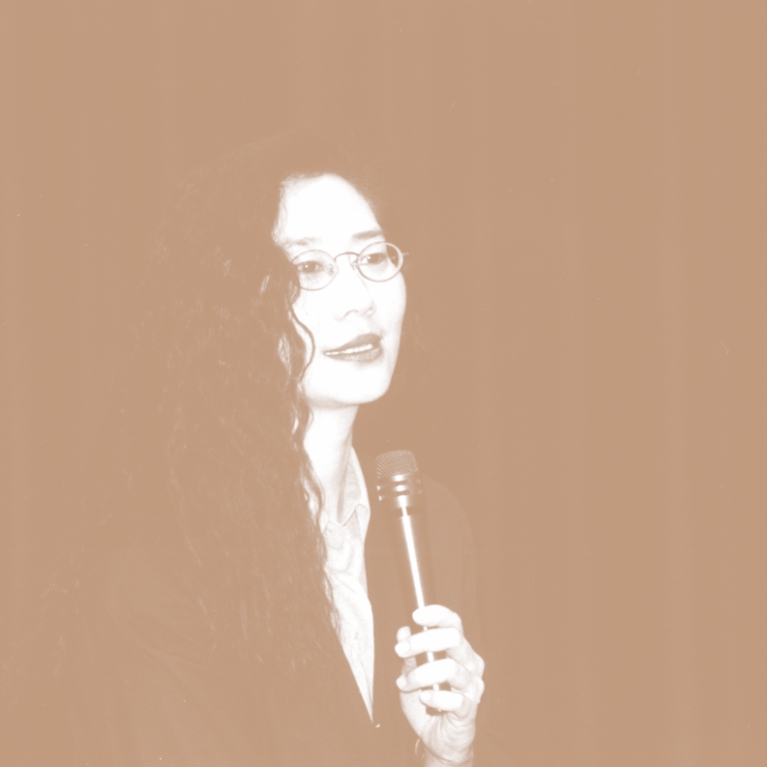
主講│薛保瑕 博士/國立台南藝術學院造型藝術研究所教授兼所長
時間│90.10.20 (六) 2:30~4:30pm
地點│正修技術學院 綜合大樓12F國際會議廳(03A1201)
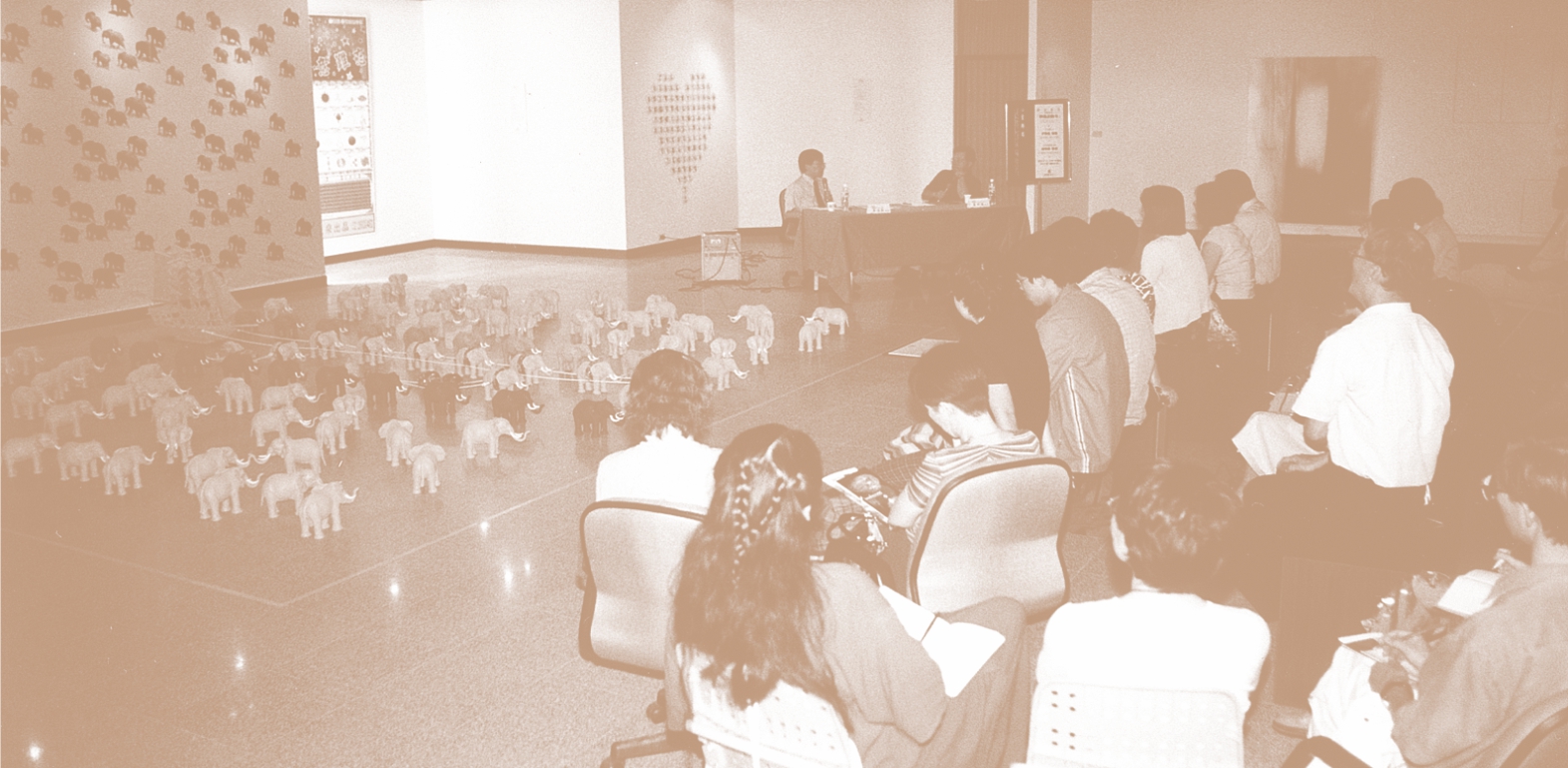
主講│李俊毅 醫師/高雄長庚醫院 精神科主治醫師
對談藝術家│盧明德 教授/國立高雄師範大學美術研究所教授兼所長
時間│90.9.15 (六) 2:30~4.30 pm
地點│正修技術學院綜合大樓11樓藝術中心
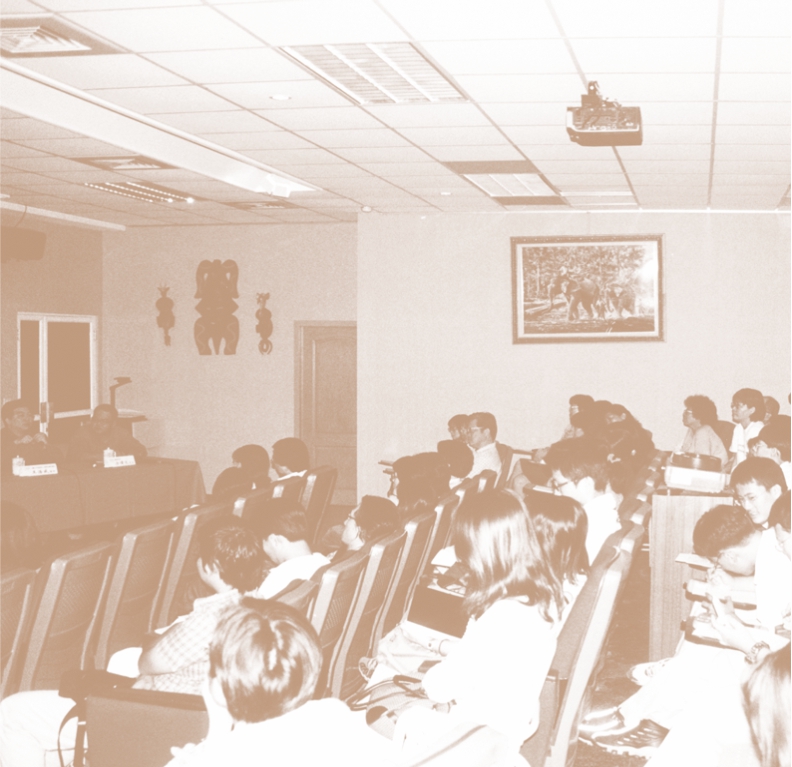
主講│王浩威 醫師/心靈工作室負責人 精神科專科醫師
對談藝術家│方偉文/藝術創作者
時間│90.9.29 (六) 4:00~5.30 pm
地點│正修技術學院綜合大樓9樓藝術專業教室
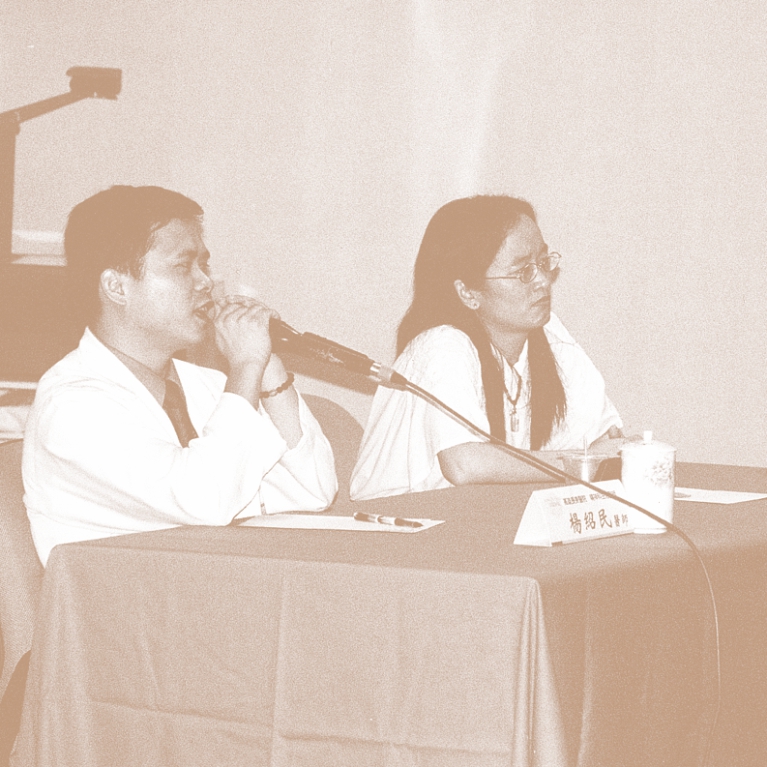
主講│楊紹民 醫師/高雄長庚醫院 精神科主治醫師
對談藝術家│高秀蓮 博士/國立高雄師範大學美術系副教授
時間│90.10.9 (二) 10:00~12.00 am
地點│正修技術學院綜合大樓9樓藝術專業教室
時間│90.9.22~90.11.17 (每週六) 10:00~12.00 am、2:00~4:00pm
地點│正修技術學院 綜合大樓11樓藝術中心
 藝術治療在職能治療臨床之應用/呂淑貞主任